
If you only want to worry about birth control when you’re actually about to have sex, there are options available.
Male and female condoms, diaphragms, and spermicidal gels do not contain hormones and will not interfere with your cycle, but are also less effective at preventing pregnancy.
How well do they work?
- Traditional diaphragm (with spermicide): 12% of typical users will get pregnant in a year.
- Spermicide: 21% of typical users will get pregnant in a year.
- Male condoms: 13% of typical users will get pregnant in a year.
- Female condoms: 21% of typical users will get pregnant in a year.
Because of these rates, you should only use these methods if you are OK with the possibility of pregnancy. However, male and female condoms offer reliable protection from sexually transmitted infections (STIs).
“Let’s say that somebody’s in a relationship and they’re not very particular about avoiding pregnancies: ‘Oh, if it happens, it happens, but I want to use something to protect myself from STIs,'” Suneela Vegunta, M.D., says. “That would be a good option for them.”
No other form of birth control can give you effective STI protection. Unless you are in a mutually monogamous relationship and have been tested for STIs, use a new condom every time you have sex — even if you are on another form of birth control.
There is a newer contraceptive called Phexxi, which became available in 2020. This can be used at the time of intimacy. It is a vaginal gel that contains citric acid, lactic acid and potassium bitartrate. The gel increases the acidity of the vagina and makes it difficult for the sperm to move. It has minimal side effects, such as vaginal irritation, and requires a prescription by your healthcare team.
Learn more about what is available now and newer options being approved in this 5 part series on birth control:
Birth control pills and beyond: Exploring your contraception options – Part 1
Looking to maintain a regular cycle? Estrogen-progestin combination options – Part 2
Looking for lighter or no bleeding? Progestin-only options – Part 3
Is your family complete? Permanent birth control – Part 5
Relevant reading
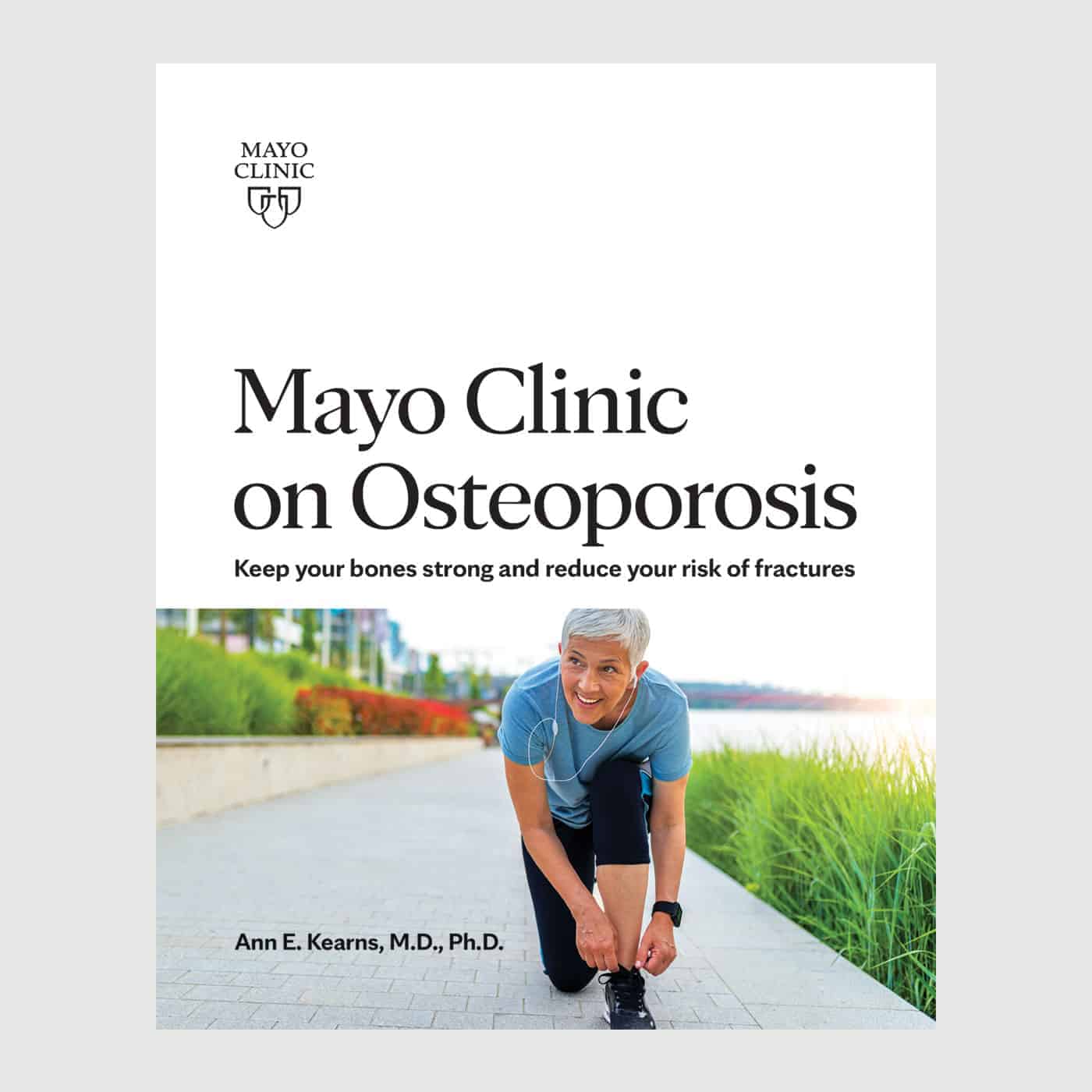
Mayo Clinic on Osteoporosis
Around 54 million Americans live with osteoporosis or low bone mass, but many don’t recognize the symptoms until it is too late. Before a bad fall or fracture renders you immobile, learn how to reduce your risk of developing osteoporosis, manage your day-to-day symptoms, and even treat the disease with the tools provided in Mayo Clinic on Osteoporosis.