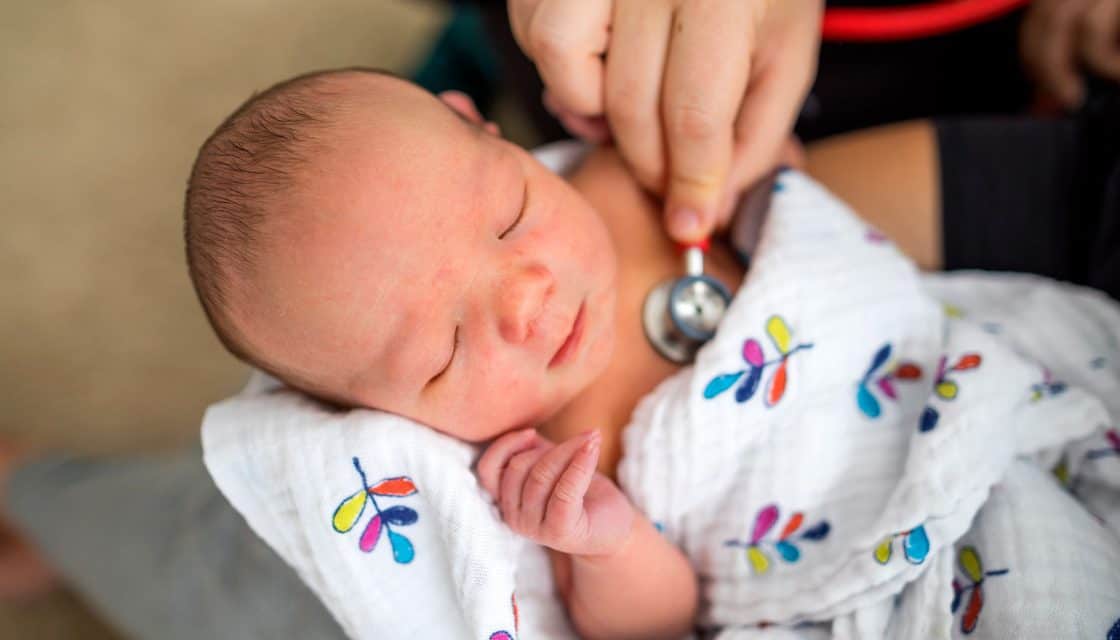
As a new parent eagerly anticipating the post-birth journey home with your baby, one crucial step may catch you off-guard before you can leave: newborn screening tests. These tests, which include metabolic screening, can secure a healthy start for your child and help you safeguard your baby‘s future. They’re also legally mandatory in every state, as is newborn hearing screening.
Handing over your newborn for testing can cause some understandable concern for new parents, but understanding the science behind newborn screening can help you feel mentally prepared for this important step.
The science behind newborn screening
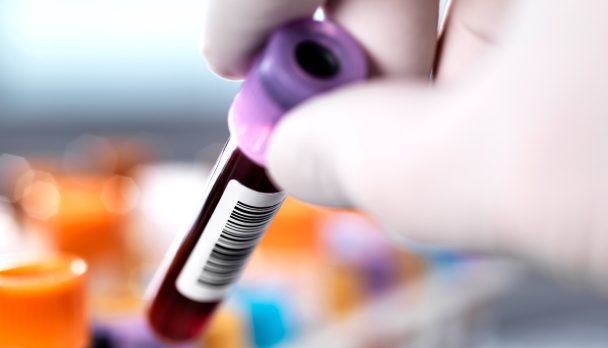
Newborn screening involves taking a small sample of blood from a tiny puncture on your baby’s heel, which is then sent for testing. Labs can examine that blood for certain substances — such as chemicals or proteins — that suggest different diseases or disorders, which can then be tested for more specifically. Jay H. Homme, M.D., a pediatrician at Mayo Clinic in Rochester, Minnesota, puts it this way: “There can be a misunderstanding that if the screening test comes back abnormal, it means that the child absolutely has that condition.”
“When in fact, screening leads to the next step, which is testing for the condition utilizing more-sensitive and specific methods.”
Why early detection makes for a brighter future
Early detection of the disorders these screening tests can find give your child a head start with management and treatment options. Each state has its own screening program, so the lineup of tests may vary. National recommendations cover a panel of 35 core disorders and 26 secondary disorders, but some states require checking for additional diseases. Left untreated, some of these diseases can lead to cognitive problems, growth issues, organ damage or even death, which is why it is vital to screen every child. Here are some examples of diseases or conditions that are often screened for:
Congenital adrenal hyperplasia (CAH). This hormone deficiency condition can cause lethargy, vomiting and muscle weakness. Mild cases can lead to reproductive and growth issues, while severe cases can lead to kidney dysfunction or death. Treatment for CAH is lifelong, but the condition can be controlled.
Congenital hypothyroidism. This is a thyroid hormone deficiency that can cause slowed brain development. Early detection and treatment can prevent some of the more-severe outcomes, like cognitive disability and stunted growth.
Cystic fibrosis. This causes thickened mucous secretions in the lungs and digestive system, which can cause life-threatening lung infections and intestinal obstructions. Significant developments have been made in treatment options in recent years, so early detection can lead to a longer, healthier lifespan.
Galactosemia. This condition occurs when the body has trouble with galactose, a sugar found in milk. Not being able to process galactose can cause vomiting and diarrhea. Galactosemia also can have more-serious side effects like jaundice, liver damage, blindness, growth failure and, in the most severe cases, death.
Phenylketonuria (PKU). This causes the body to retain too much phenylalanine, a common amino acid found in most foods. Too much phenylalanine can lead to cognitive and motor disabilities, seizures and growth delays. Early detection through a newborn screening test, followed by treatment, can increase your child’s odds of having typical growth and development.
Sickle cell disease. Sickle cell disease is an inherited condition that prevents blood cells from circulating. This can cause vital organ damage and severe bouts of pain. Early intervention can minimize side effects and complications.
While these disorders can be a serious threat to your child’s health if left undetected, the effects of many can be minimized with early detection and treatment.
Newborn hearing screening
Hearing screening is another important check that your new infant will receive. Detecting early whether your baby has hearing difficulty can prevent avoidable problems in the future, such as hampered language and social development. If there are issues with your baby’s hearing, you’ll be presented with intervention options that can protect your child’s ability to develop language and social skills on par with peers.
Hearing screening for newborns lasts only 5 to 10 minutes. Testing uses either auditory brain stem response (ABR), which examines your baby’s ear-to-brain connection, or otoacoustic emissions (OAE), which detects whether sound echoes from your baby’s ear canal.
Misconceptions about newborn screening
Even though you may have no concerns about detecting the conditions described early on for your child, you may still have a few concerns about the testing, which is natural. Dr. Homme says that while most parents don’t express much hesitancy when it comes to newborn screening, he’s heard some of those concerns.
“Some new parents have mentioned concerns about the blood spot testing related to what happens to the samples,” he says, noting that they wonder “if this is a way for the government to collect information about their child that could potentially be used in the future without their consent.” If a parent feels strongly about this, there’s an easy solution, he says: “Parents can request to have their child’s blood sample destroyed after the newborn screens have been run.” Dr. Homme also notes that patient and data privacy are top priorities for newborn screening labs.
Another concern about newborn screening tests you might come across online if you do some internet searches is the possibility of false positives. False-positive test results for newborn screenings were found to cause an impaired parent-child relationship and increased parental anxiety, according to a study. Dr. Homme says that parents should keep in mind that screening results are not always black and white. “It may be misunderstood that having a normal newborn screen completely rules out the possibility of the screened for conditions,” he says.
“However, if there is clinical suspicion, it is always recommended to go ahead and do the appropriate testing — even in the setting of a normal newborn screen.”
Relevant reading
Men's Health Bundle
Man Overboard! is a fun-to-read handbook on men’s health is written by Craig L. Bowron, M.D. who uses his years of education and professional experience to help you get through this pilgrimage, this magical journey of aging-while-male, not unscathed but with a sense of control and dignity. You can get…

Want more children’s health and parenting information? Sign up for free to our email list.
Subscribe Open parent optin subscribe modal