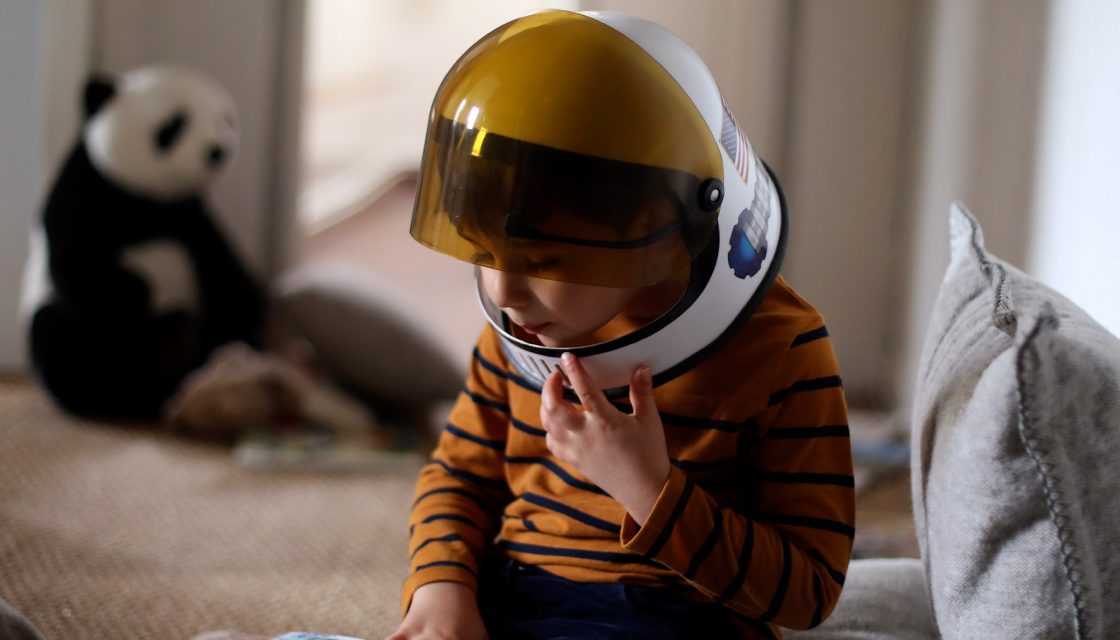
Have you ever wondered if you could survive in space? This question, along with many others, is explored in “Spacecare: A Kid’s Guide to Surviving Space,” by Jennifer Swanson. Filled with kid-friendly information, pictures, questions and answers, Spacecare gives an inside look at the experiences of astronauts throughout their entire space journey. A large part of this journey, which is shown in the following excerpt, is focused on keeping muscles strong! Swanson dives deep into the importance of exercise for astronauts and includes questions from real kids and related facts from Mayo Clinic experts. For anyone curious about the mysteries of space and survival, Spacecare is a must-read that will teach, guide and inspire!
By now, the idea of floating everywhere sounds really fun, doesn’t it? Not needing to walk, run, or climb stairs? Fantastic! And yet, those actions are what keep muscles strong. Not doing those activities for long periods of time weakens the muscles.
Muscles love movement. They also love resistance, a force pushing against them. On Earth, that’s gravity. Space doesn’t have that. And that’s a problem. Without resistance, muscles can atrophy, or get thinner and weaker. Microgravity affects bones, too. Bones are healthiest when they are used to walk, run, sit, and stand. Without gravity, bones will start to weaken from not being used. If that happens, it can cause serious issues for astronauts. After all, they are going to need those muscles when they get back to Earth or arrive on the Moon or Mars—if that is where they are headed. How can astronauts keep their muscles and bones strong in microgravity?
They work out! Astronauts spend about two-and- a-half hours a day exercising. It can be walking—or running—on a treadmill. Using the treadmill is the same in space as on Earth—except, well, astronauts can run upside down if they want. And they have to wear several tethers to keep them in place. Without the restraints, they would float away.
The Advanced Resistive Exercise Device (ARED) is another way to work out. ARED is a special weight-lifting machine. The cables on the machine act as the weights by providing resistance when pulled. Astronauts can dial up the resistance level they want, up to 150 pounds.
The ARED also has a bar where astronauts can do squats, dead lifts, calf raises (for their legs), and even pull-ups. The bar provides up to 600 pounds of resistance to the user.
Eating healthy food also helps maintain healthy muscles and bones. Astronauts get meals with vitamin D, calcium, proteins, and omega-3 fatty acids to stay healthy. Doctors keep a close watch on the activity levels of the astronauts while they are in space. Even with exercise, some loss of muscle mass (the size of the muscle) and bone density (how dense the bones are) are going to happen in space.
Doctors want to be sure that no astronauts lose too much of either one before they come home. The longer a person stays in microgravity, the more it affects them. That’s why sometimes you see astronauts being carried off the capsule after they return to Earth. Usually after a few months, their bone density returns to normal. Then they start working out on Earth. Regardless of where they are, astronauts need to stay in shape.
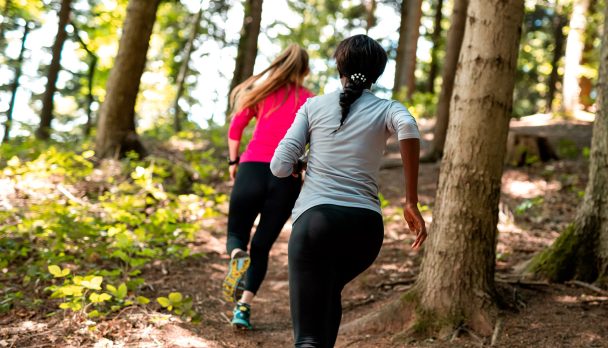
Mayo Medi-Facts: School-age kids should get about sixty minutes of exercise every day. This doesn’t mean they have to actually work out. It can be walking to and from school, around school, or running during recess. The more time spent moving, the better it is for the body!
Do things inside us (like our blood or stomach) also float in space? —Anil, 11 Yes—the food in your stomach floats, which can make you feel full even if you haven’t eaten a lot. Your bladder also feels different when it’s full. You have to learn your body’s new cues for when you need to go.
Relevant reading
Back on Track
Practical steps based on brain science and development to help kids thrive – post-pandemic and beyond

Children’s health information and parenting tips to your inbox.
Sign-up to get Mayo Clinic’s trusted health content sent to your email. Receive a bonus guide on ways to manage your child’s health just for subscribing.