The majority of childhood headaches pass within 72 hours and have broad causes, the most common being migraine. Much less commonly, headaches can linger longer and may be associated with underlying conditions. Here, Paul E. Youssef, D.O., a pediatric neurologist at Mayo Clinic in Rochester, Minnesota, answers important questions about how to identify your child’s headaches, how to prevent or treat them, and when to seek medical advice.
Mayo Clinic Press (MCP): Is there any truth to the longstanding myth that children don’t get headaches the way adults do?
Dr. Youssef: That’s certainly not true. Headache is one of the most common concerns reported by children, and current headaches are reported in about a third to a half of all children and adolescents. In most cases of childhood headache, parents are likely to see their child dealing with a migraine.
MCP: At what age can children accurately say they have a headache?
Dr. Youssef: Grade school children are developmentally able to report that they have head pain and will typically describe a bifrontal headache where both sides of the cranium hurt. Then as children get older, if they are experiencing migraine, they will report a pounding about the temples or a unilateral headache on one side.
MCP: What is a migraine?
Dr. Youssef: Migraine is a neurological disorder characterized by recurrent episodes consisting of moderate to severe throbbing head pain — often associated with sensitivity to light, sensitivity to sound, and nausea and occasional vomiting. Some children also experience abdominal pain, difficulty focusing, blurred vision, lightheadedness or dizziness with migraine attacks. A migraine attack typically lasts from an hour to several days.
MCP: How can a parent differentiate between a migraine, a tension headache and a cluster headache?
Dr. Youssef: Migraine is distinguished from these other headache types because of the coexistence of gastrointestinal symptoms, such as nausea or vomiting, as well as sensitivity to light, noise and strong smells. One of my mentors used to say that you could recognize someone with a migraine in a shopping mall because they will be wearing sunglasses and avoiding the candle stores. Migraine tends to have more of a throbbing, pounding headache quality, whereas a tension headache triggered by stress, worry, caffeine or poor sleep, tends to be more of a tight, dull, bandlike pain. Migraine also tends to be worsened by exercise or physical activity and improved by sleep, whereas tension headaches don’t have those features. Cluster headaches can occur in children, but they are quite rare. When a cluster headache happens, it typically is a one-sided headache that’s often associated with redness or tearing out of the eye that’s on the same side as the headache or runny nose out of the same-side nostril.
MCP: How is migraine diagnosed?
Dr. Youssef: There is no blood test or scan that will tell a doctor if your child’s head pain is a migraine. The best way for your doctor to know is to talk to your child about the specifics of the head pain, note the response to treatments, ask about family history and how the pain is affecting the child’s daily functioning, and conduct a physical examination.
MCP: How do migraines affect quality of life?
Dr. Youssef: Migraine attacks can lead to missed classes and poor academic performance. Parents can work with teachers, school nurses, and their healthcare team to raise awareness of the academic barriers that kids with migraines face. A 504 plan can give kids with chronic health conditions additional academic support and accommodations.
MCP: Do younger children get headaches?
Dr. Youssef: About 2% to 5% of preschool children will experience migraines. However, gastrointestinal symptoms will typically predominate when the child is developmentally unable to voice head pain. Children might appear unwell, they might be averse to stimuli like bright lights and loud noises, they might report stomach upset or vomiting — and after they sleep, that will improve.
MCP: Parents often worry their child’s headache, if severe, might be a sign of serious inflammation, such as meningitis or encephalitis. How are these problems differentiated from a headache?
Dr. Youssef: Headache can be a symptom of both meningitis and encephalitis, but usually there are other symptoms such as high fever. Fever would be unusual for a migraine. With meningitis, there also can be neck pain and symptoms that will indicate something more serious than primary headache disorder. With encephalitis, children experience aching muscles and joints and vomiting at first and then confusion, seizures and fits — and even hallucinations — if left untreated.
MCP: What are the red flags for childhood headaches?
Dr. Youssef: The signs that make neurologists concerned about a child experiencing headache are a new headache of less than a month’s duration that seems to be severe and headaches that consistently wake a child in the night or occur upon waking in the morning with or without vomiting that’s not accompanied by illness or fever. Also concerning are headaches that are triggered by coughing, laughing or sneezing — or accompanied by changes in a child’s balance or coordination, gait problems, development of abnormal eye movements, or the occurrence of seizures. These are all scenarios that would likely trigger consideration of neuroimaging tests. If your child is experiencing any of those red flag symptoms, seek medical attention.
MCP: If a child’s headache lasts longer than 72 hours, should the child automatically see a health care professional?
Dr. Youssef: If the child otherwise appears fairly well and is not having any red flag symptoms, then I think it’s reasonable to just continue to do your best at home. If the headaches are debilitating or functionally limiting, then see a medical professional.
MCP: Can mental health conditions trigger a headache?
Dr. Youssef: When medical professionals see a child reporting a headache, consideration is given to other diseases or conditions, including mental health. Kids who experience headaches are more likely to have mental health challenges, such as anxiety and depression. And those who have anxiety and depression are more likely to get headaches. They often feed off each other.
MCP: Do lifestyle habits cause headaches?
Dr. Youssef: With teenagers, busy schedules or stress is one of the most common headache triggers. About 90% of children we see in our clinic with headache problems get more headaches during the school year because of the busyness they experience. Things often improve during summer months when schedules are more relaxed.
MCP: Is quality of sleep a factor?
Dr. Youssef: With headache at all ages, sleep is important, and teenagers tend to be more sleep deprived. I encourage kids to get eight or nine hours of sleep a night, and if they’re not doing that, I encourage them to try to see what the challenges are — whether it’s their schedule or a coexisting sleep problem.
MCP: Where do diet and hydration fit in?
Dr. Youssef: It’s always important to look at eating habits relating to headaches since some teenagers tend to skip meals, breakfast in particular. The bodies of children that get headaches often lack routine, and without fuel a headache day is more likely, so it’s encouraged to eat meals more regularly. I talk about hydration and making sure that a child is drinking adequate amounts of fluids. Those are all simple, modifiable lifestyle things that I encourage when I’m talking to parents about what they can do to empower their children to make headaches less likely or problematic.
MCP: Parents may get the idea from searching online that their child’s headache has an environmental factor if, for example, a mold outbreak has been discovered at home. Is this a genuine concern?
Dr Youssef: Families ask this a lot, but I’m not aware of any convincing literature that suggests mold in the home or some other toxin exposure is likely to be contributing to childhood headaches. Typically, I don’t do testing for heavy metals or toxin exposure unless there are other signs or symptoms that are concerning.
MCP: Do allergies promote headaches?
Dr. Youssef: If a child has seasonal allergies and a lot of upper respiratory symptoms that could be lowering the threshold for headaches, we want to make sure those are being addressed by ordering allergy testing.
MCP: How often is the weather an antagonist for headaches?
Dr. Youssef: About 30% of kids who experience migraines might identify that they’re more likely to get headaches when there’s a low-pressure system passing by or changes in barometric pressure.
MCP: Can a child’s diet trigger headaches?
Dr. Youssef: Of the children experiencing headache, 3 in 10 notice a food trigger. Things that can make headaches more likely are foods containing monosodium glutamate (MSG), artificial sweeteners and nitrates.
MCP: Is there any correlation between excessive gaming or screen time and childhood headaches?
Dr. Youssef: I see many children — particularly with migraine — who report that heavy screen time worsens their headaches. It’s a challenge because a lot of academic work is on screens these days and teachers are using smart boards at school. For some children, where computer use is a significant problem because they are so sensitive to light, they need to avoid excess screen time or wear migraine-type glasses that filter out certain light rays. Some children with migraine may get a special education plan that allows homework to be done with paper and pencil rather than on screens.
MCP: If a health care professional recommends head imaging to rule out certain problems, what can a family expect?
Dr. Youssef: The most optimal neuroimaging study is an MRI because it is more sensitive for showing structural abnormalities of the brain that can potentially cause headaches. However, with MRI, the child has to lie still for about 30 minutes. A younger child may not be able to hold still that long, so anesthesia is sometimes needed. If an MRI scan isn’t possible, sometimes a less effective CT scan will be used just because of the lack of anesthesia needed. The odds of finding an underlying abnormality though are quite rare: around 1% to 2%.
MCP: Lastly, what is the best way to treat a common headache arising from a cold, a virus or stress at home?
Dr. Youssef: Use medicine you can get without a prescription like ibuprofen (Advil, Motrin, others) or acetaminophen (Tylenol, others), and have your child drink plenty of fluids. And try to have the child rest or sleep. That can be one of the most effective treatments, especially in younger children.
Relevant reading
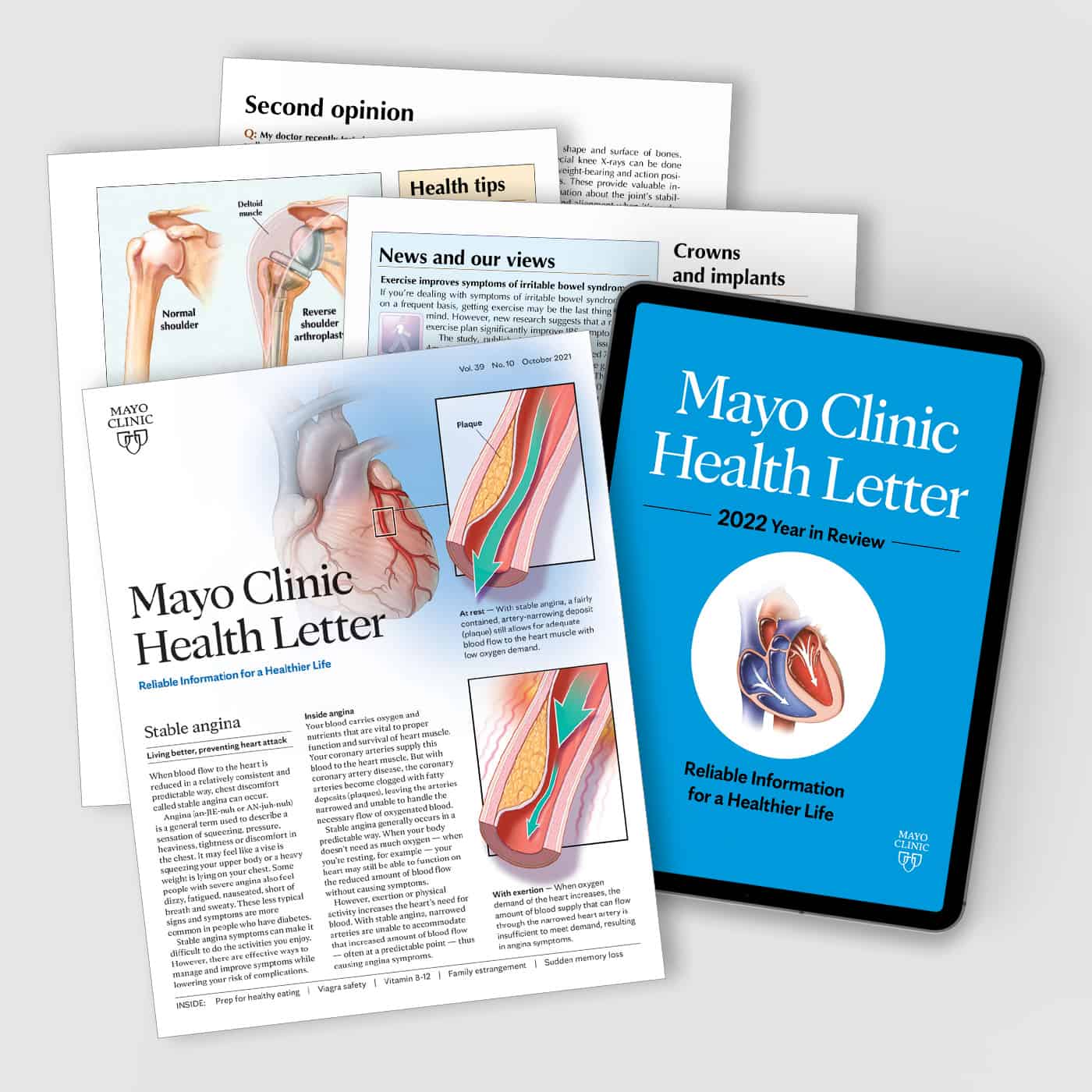
Health Letter Subscriptions
Get direct access to the knowledge, wisdom, advice and practical information on healthy living from Mayo Clinic, one of the world's foremost health authorities. Your subscription includes twelve monthly 8-page issues and four Special Reports. Each 8-page issue of the Mayo Clinic Health Letter is filled with full-color medical illustrations,…
Children’s health information and parenting tips to your inbox.
Sign-up to get Mayo Clinic’s trusted health content sent to your email. Receive a bonus guide on ways to manage your child’s health just for subscribing.