Substance use disorder and recovery extends beyond a patient’s brain and physical body. Dr. Marvin Seppala is the creator of Hazeldon Betty Ford’s comprehensive opioid response program. He joins Dr. Lai and Dr. Geyer to share insights about the biopsychosocial spiritual approach to substance use treatment.
- Purchase Ending the Crisis by Dr. Holly Geyer
- Learn more about pain management and safe opioid use on our Opioid Resource Center
- Comments or questions? Email us at mcppodcasts@mayo.edu.
- If you or a loved one are dealing with a substance use disorder, visit Substance Abuse and Mental Health Service Administration.
Read the transcript:
Dr. Benjamin Lai: Hello. Welcome to Ending the Opioid Crisis. I’m Dr. Benjamin Lai.
Dr. Holly Geyer: And I’m Dr. Holly Geyer.
Dr. Benjamin Lai: This is a podcast series aimed at getting a deeper understanding of the opioid crisis that has ravaged our country. Today we have Dr. Marvin Seppala. Dr. Seppala is a nationally known psychiatrist and addiction treatment leader who served as Chief Medical Officer of the Hazelden Betty Ford Foundation for 25 years until his retirement at the end of 2021.
Dr. Seppala developed and implemented Hazelden Betty Ford’s comprehensive opioid response with 12 steps or Core 12, which was launched in 2012. This approach integrates medications for opioid use disorder together with clinical therapies, 12-step-based practices and other peer support to treat opioid use disorder, taking a truly biopsychosocial spiritual approach to treatment.
Dr. Seppala also served as adjunct assistant professor at Mayo Clinic College of Medicine and Science, and the Hazelden Betty Ford Graduate School of Addiction Studies, and has authored several books on addiction treatment, opioids and pain. Dr. Seppala also served as board member of the American Society of Addiction Medicine for several years. Dr. Seppala, welcome to the show.
Dr. Marvin Seppala: Thanks a lot. Dr. Lai. I really appreciate being here.
Dr. Benjamin Lai: Dr. Seppala, I have many questions for you, but one thing that I always hear from my patients and their families is that addiction affects more than just their brain and their physical body. It’s more than just withdrawal symptoms and cravings. Oftentimes it affects various aspects in their family and their lives, how they interact with other people. Can you comment a little bit, Dr. Seppala, on the biopsychosocial and spiritual model, how that affects patients with addiction?
Dr. Marvin Seppala: I’d be glad to. For a biological perspective, we know this is a brain disease, and although a lot of people don’t necessarily buy that, and so it’s really useful even when they want to look beyond the brain, it’s good to start there to explain just what this disease is about and what we know about it, especially since the scientific information about it is so rapidly evolving.
So, I always start there to describe some of the aspects of each of the drugs they may be using, how it’s affecting the brain receptors involved, and then how the reward center starts to take over as a result of this overwhelming opening associated with these substances, dopamine being released there that prioritizes drive states in such a way that they would do some of the crazy things that happened during the course of addiction, the behavioral changes that occurred that they can’t understand and don’t know why they do.
The loss of family, loss of jobs, driving while intoxicated, all those things that they find themselves doing, can’t figure out why and can’t stop. The thing is that it helps them to know that their brain is working against them. It’s working for the addiction at that point, and then the reward centers kind of been reprioritized to support continued use, not to stop use. That’s become the norm.
From there I’ll talk about those very difficult aspects of behavior and the shame and guilt associated with that, and the necessity of dealing with those internal feelings and the self-hate that can go along with that and the necessity to do so in order to get oneself on the right track, and give oneself a chance to remain abstinent over time by dealing with such issues.
And from a social perspective of people in the midst of their drug and alcohol use will start to change friends because they feel more comfortable around people that are using about as much as them. Or if they can’t have that, they isolate themselves so that they don’t have to deal with other people and elicit more of this guilt and shame.
There’s decreased interactions with those that are closest to family members because they don’t want anyone to know just how bad this is and how often they’re using and what’s really happening in their lives and this self-hatred as well. They don’t want people to know that. And then there’s difficulties in the workplace or at school or whatever the primary daily activity is all about, as well as ongoing family problems that start to occur. At least in the early to mid-stages of addiction, but will become really obvious after that point in the mid to late stages of addiction.
Dr. Benjamin Lai: That is just such a kind of holistic view of addiction. And I know in your work you developed the comprehensive opioid response approach in Hazelden Betty Ford. Is that the kind of approach that you and your staff took? And can you tell us a little bit more about the program and perhaps what you learned from it and some of the results from that program?
Dr. Marvin Seppala: Yes, the Hazelden-founded Minnesota model, as it was called in the past, based on the 12 steps of AA back in 1949. So, they were well versed in that. And it was the primary way of treating people with any addiction, using the 12 steps. And as a result, we knew we had to continue that and it had been very successful. So, we wanted to.
Yet we wanted to be sure that we could incorporate medications as well, which were early stages, very unpopular around the country. And still the medications for opioid use disorder are only used by about a third of the treatment programs nationally.
Really abysmal when you think of an illness where only a third of the people are gaining medications that could be beneficial. Medications for alcohol use disorder probably even less. And nicotine use disorder, I think is… I haven’t seen the numbers recently, but it was in about the same ballpark.
And so, in general, people tend to think. They usually use the phrase something like this: “They don’t want to trade one drug for another.” And it’s simply a misconception. They’re using drugs or alcohol. We’re prescribing medications and we try to make the point that these are specifically used to address the addiction, not to continue the addiction and actually be quite beneficial for people.
But in our system, because we had such a long history with toe-step orientation or abstinence-based orientation, there was a lot of resistance to consider in using medication for opioid use disorder, even though we had already started using medications for alcohol use disorder and we’re using them for nicotine use disorder as well. And I was concerned about that and went to our CEO and our board to be sure that I had support at that level before I went down this path and then brought a team together that spanned the organization in regard to both geographic location and professional background, to be sure that we had a broad base of people engaged in this project, and one of the counselors on the team who was really instrumental in helping us get this off the ground and started for the organization. When I asked him to be on the team he asked me if this is a good career move. He was so concerned about supporting medication in our city. And the good news is that the science kept rolling along and we had more and more information, proving the benefit of the use of buprenorphine for opioid use disorder and naltrexone.
We also had at the national stage all of a sudden when we announced this and I had so many public remarks, really negative, nasty remarks about what we were doing initially from all these other treatment programs around the country and personalities in the recovery community that said we were turning our backs on our heritage and that I was leading that.
It was an unusual experience for me because I’m used to advancing care for people in a way that’s supported by the literature and being praised for that. And so, to find people resistant to it in such a way was surprising. But I knew we’d get a little. I didn’t think we’d get that much. And fortunately it worked out extremely well.
We did a research project that showed the benefits really specifically and showed that using medications in a 12-step oriented access-based program actually worked out extremely well and we had the best engagement of our patients with opioid use disorder that we’d ever had in both residential treatment completion and continuing for outpatient care afterwards. And we had the best outcomes rates we had the population as well.
So, we were very pleased with how it turned out. And we used the medications with exactly how you opened our discussion with the psychosocial therapies and with peer support.
Those three things I think are so powerful when used together to help people because we are taking that biological, psychological or social orientation to bear, and we added spiritual as well, because the 12 steps are basically founded in a spiritual manner. And that’s hard for some people and we have to spend a lot of time addressing that. But for people that their life is in the balance, and especially with opioid use disorder, they may have had multiple overdoses and may have had near-death experiences.
They can’t stop and they can’t understand why. To tell them is just kind of a cognitive approach, at least in the back of their heads. They’re going: “Well, my own brain keeps doing these things that don’t work. I can’t get out of this cycle. I’m just stuck here, and it’s a life or death sort of situation. I need help.”
So, I like to think of it in those terms in discussing the spiritual of people that they need to get outside of themselves in some way, whether that be religion, some sort of spiritual understanding, whether it’s a friend, friendships, other people in recovery or love itself, whatever they choose to use, they need to get to some degree outside of themselves and seek out the way that can make a difference in their lives.
Dr. Holly Geyer: In March of 2023, the FDA approved the first over-the-counter Naloxone nasal spray to fight the opioid epidemic in the United States. As we continue to navigate the crisis of opioid use, Mayo Clinic is here for you. My book, Ending the Crisis, is a handbook for anyone whose life has been touched by opioid use. Read personal stories of those struggling with addiction.
Hear advice for safer opioid use, and get step by step instructions on how to administer the lifesaving drug naloxone. Visit the link in the notes of this episode or visit dev-mcpress.mayoclinic.org/opioids to get your copy today.
Dr. Benjamin Lai: That is fantastic. I mean, really, it sounds like a very comprehensive program where you tackle the problem from multiple different angles over time. I think it’s interesting you mentioned some of the resistance you initially got with regards to medications. I want to follow-up on that point there. Do you still encounter resistance and what would be the one thing that you would say to people who don’t believe so much in medications?
What is one thing you might use to convince them or to persuade them?
Dr. Marvin Seppala: I do still see a lot of resistance. As I describe these medicines are not adequately used across the country, and there’s a chasm that still exists between those who really want to use a 12-step, absence-based approach and those who want to use medication, and there’s not enough people doing both. I like to think of everything we do in regard to helping people with addiction and caring for them as a way of reducing harm.
It’s a harm-reduction approach. Everything we do. It’s hard to stand on one approach and say this is all we need to do for people. I think we need to do all kinds of things. Our success with this disease is not very good. It’s good on the one hand compared to other chronic illnesses that require lifestyle change, but when you look at it versus other illnesses in general, we are still at best around 50% recovery at one year.
And that is not at the best numbers. In regard to abstinence are by pilots and physicians, and they’re getting in the range of 85 to 90% abstinence rates at five years. So, we know this can happen. We know it’s possible.
It’s just that those two have external motivations of a different nature than most people that can maintain their license and their livelihood, continue to fly and to practice medicine. And the results are tremendous.
Dr. Benjamin Lai: Do you have any thoughts on some of the recent regulatory changes related to expansion of buprenorphine prescribing, for example, the removal of buprenorphine, ex waiver?
Dr. Marvin Seppala: Yeah, I’m really glad to see that. I think we’ve had enough experience with it at this point. And because it isn’t prescribed adequately, the people that are prescribing it, were getting overwhelmed by the limitation. They could help 100 or 200 people when you’re doing that and there’s more people waiting at the gate to get in because they can’t get the medication elsewhere, it’s really problematic for those patients and for the provider, too.
It’s frustrated by the system that limits them when anyone can prescribe opioids to any number of people. But if you’re trying to treat those with an opioid use disorder, you’re limited to a certain number. So, I think that’s fantastic. And I’m really hopeful about that as well as maintaining the ability to use virtual care as well for the treatment of opioid use disorder with and without the medications.
Dr. Benjamin Lai: Kind of a long bad line about virtual care and trying to expand access. I know I have a lot of colleagues who work in pretty remote places around the country, and I suspect some of our listeners are probably providers or primary care providers in remote parts of the country where getting addiction services or addiction psychiatry can be quite difficult. If such a provider would like to take kind of a biopsychosocial, spiritual approach. How would you counsel them on starting and what are some of the tools that you would like to share with them?
Dr. Marvin Seppala: I always go back to my medical school experience at Mayo. Actually, that initial evaluations are absolutely essential to any disease, and this one too. So, if they show up with addiction, but there’s other mental health problems or other medical problems, we need to know all of that at the onset to develop a good treatment plan for that individual.
I think that’s so important to start there and use a biological orientation, just as they would with any other illness. That helps set the stage for the individual, too, that they recognize that it isn’t just a matter of stopping this drug or that drug.
As I say that I’m reminded that the medications for opioid use disorder only stop the benefits of opioids or the downside. We don’t know what they’ve added for the individual. It’s usually the benefit. And they usually are using multiple substances. There are remarkable limitations to just a biologic approach to treating. So, we need all these other aspects as well and for the individual practitioner to recognize that and not just count on medication.
We know that over half the people who start buprenorphine stop it, and usually rather quickly, that’s really problematic. So, with other psychosocial treatments, with peer support, that enhances the likelihood of staying on the medication and enhances the likelihood of staying abstinent. And they’re getting all these other features of the care that they need and the ability to process this really difficult, confounding disease and their own thought processes, especially around that: “Why am I still craving, why am I still wanting to go and get high, even though I know it could kill me?”
All those questions come to mind. And for someone that’s in practice,facing that individual using other resources in the area, even if it’s just AA or NA, or some form of mutual help group that happens to meet there because most communities have some type of support for those that are seeking recovery from addiction.
It’s usually an anonymous group, but not always, and they can be remarkably helpful. I like to say that when we look at disease management for chronic illness of any kind, I think that 12-step model is about as good as it gets because it’s free, it’s available if someone’s available twenty-four seven in most places. They have multiple meetings per week in most places.
In major metropolitan areas hundreds of meetings per day and it works. The research has shown that it works. So, we’ve got this remarkable tool that we need to take advantage of as practitioners for our patients because they are more likely to stay sober if they do that, to stay abstinent and to change their lives in pretty remarkable ways.
I would always count on those other people that can help, and especially in that realm. That peer support is truly powerful. And also other resources as well for talking about spirituality there’s other resources in almost any community around the country to address things, whether it’s a church or individuals that are interested in helping out in that manner too.
Dr. Benjamin Lai: That’s a really great point, and we had to mention that a little bit already, taking a comprehensive approach, addressing some of the other conditions and barriers. One thing that I’ve noticed in a lot of my patients who struggle with substance use disorder would be underlying psychiatric conditions like depression or anxiety.
Are there certain psychiatric conditions that may predispose, that may make a person at higher risk for developing an addiction?
Dr. Marvin Seppala: That data shows that any mental health problem increases risk for addiction. And there’s a real overlap in both regards that addiction also increases risk for mental health problems. And the specific ones that I think of in regard to hands at risk, there’s not really good research that spells out numbers or anything. But I think about self-medicating, especially depression and anxiety and trauma.
If someone’s depressed and they take a psychoactive substance almost independent of type, even alcohol, which in the long run can be depressing, and it’s yet that initial high, that initial feeling from it, the relief from the depression can be pretty astounding for some people. And they lose sight of the fact that it’s actually worsening things over time because they’re focused on that initial feeling that they get and it drives continued use.
And the same for anxiety. Certainly those two issues are the primary psychiatric issues that people have walking into addiction treatment, but trauma as well. Trauma and addiction go hand in hand. The scientific explanation for the genetic aspects of addiction include the possibility that people that are genetically predisposed to addiction have a low dopamine set point. So a lower concentration of dopamine in the portions of the brain that it’s necessary for general good feelings day in, day out.
And so, some of those people are just a little on the low side and they start using these substances and it’s like they may be alive, feel alive for the first time in a way that they’re part of instead of feeling left out and different. And for those who have trauma, it’s described in a similar manner and maybe even without a genetic predisposition for addiction, they may have had trauma that affects their dopamine effects, defects their reward center in a way that downregulates that dopamine, so to speak.
When they use, they also have this feeling like not quite this same sort of high, but they feel normal almost. As in they just don’t have that ongoing sense of pleasure and joy from life that most people have. And as a result, I think those issues, especially with trauma, do lead to a higher likelihood of addiction to those substances.
And we certainly see it in the addiction treatment settings where there’s just a very high percentage of people with trauma. And they used to have great difficulty even admitting to such trauma. That’s still the case for some people, especially depending on the type of trauma they’ve experienced. And yet I believe most addiction treatment settings now open that door much wider for those people to be able to discuss those issues and start to address them.
And we know that relapse rates are much higher with people that have mental health problems, especially if they’re not addressing them. Again, going back to this biopsychosocial approach, to use everything we can to address those issues as well so that the patient is more likely to remain abstinent. There’s some research that shows that if someone has a coexisting psychiatric illness in particular, like depression, anxiety, they may actually be a little more likely to stay abstinent initially after treatment. They have a deeper recognition of the problem. Even though it’s multiple problems, they really want to do something about it.
There’s a little more motivation for that. But over time, it can really trip people up, especially if they’re not following through with all of these issues. After the treatment experience itself.
Dr. Benjamin Lai: That’s really interesting. Makes me think, for example, as a primary care provider, if we should be doing more substance use disorder screenings in our patients with depression and anxiety and potential signs of post-traumatic stress.
Dr. Marvin Seppala: It makes a lot of sense to me. I’ve advocated for, especially in primary care, to do a quick screening for addiction for anybody that comes in for an initial evaluation and an ongoing way over time, at least annually. It’s such a common illness. And in general, until recently there was so little information about it in medical training, on average, 8 hours of medical school, which was mostly about liver dysfunction from alcohol and that sort of thing.
So, we know the medical but not necessarily the whole story about addiction, and that’s improving across the country. I know it is of May of us for sure, and in other places as well. Nursing gets very little training in addiction. Psychologists get very little training in addiction. So, all of our mental health practitioners, basically until recently, had very little training in addiction.
And as a result, there is a big gap there. And it doesn’t surprise me when I think about it in that way that the addiction treatment system across the country is fractured and there’s a lot of fraud and difficulty in those systems that gets a lot of media attention, and rightfully so. And they should be addressed by the states where that’s occurring.
Dr. Benjamin Lai: Dr. Seppala, I have one final question for you, a fun one, but maybe a slightly more personal one. You had such an incredible and accomplishing career as an addiction specialist. What drew you into addiction medicine and what gets your fire fueling every day at work?
Dr. Marvin Seppala: Both fairly easy for me because I actually dropped out of high school with addiction and I ended up at Hazelden as the first adolescent ever treated there at 17. So this occurred in my senior year. In Stuart Mill, Minnesota, just south of Rochester, actually. And I didn’t stay sober right away. It took a while. It actually took getting that job in the lab I mentioned earlier at Mayo, where I realized something really special, and I was stimulated in a way I’d never had been by the scientific inquiry and the really great minds that were there.
I realized I just had to do something and I finally got to an AA meeting in Rochester and got sober at 19 and a year later, on my first year anniversary, I started college with plans to become a cardiac surgeon because the lab I was in was a cardiovascular research lab. And the man who influenced me the most was a Brazilian cardiac surgeon who told me these stories of healing that I just wanted to be like wow! That’s what I wanted to do. And yet when I started clinical rotations during medical school at Mayo, I saw alcoholism and addiction everywhere.
I was taught to put it all in my notes. Do my part and put it in any evaluation as well. Put it in my notes and then present it. And at that time, historically, we didn’t do anything about it. We didn’t send people for consults. We didn’t even put a diagnosis in the chart, let alone a plan of any kind.
And I was really angry about that because of my own experience being so positive. And here I am in medical school for not addressing the very illness that I have. And I was complaining about this every week at an AA meeting I attended and two physicians also attended that worked at Mayo, and they took me aside one day they said: “Mark, you have got to quit bitching about this and do something about it.”
It opened my eyes to possibility. I didn’t have to be a cardiac surgeon after all, and I took a route that was much better for me. And yeah, so I take care of my patients really personally, I speak publicly a great deal and both formally at conferences and things like this, or the podcast or the training for other healthcare professionals, but also in the communities like here in the Portland area and around the country. You could say addiction’s been my life in a remarkable way.
Dr. Benjamin Lai: Well, what a pleasure to speak today. Thank you very much, Dr. Seppala, for your time, your insights, personal experience and your expertise.
Dr. Marvin Seppala: Thank you as well. I really appreciated being here today.
Dr. Benjamin Lai: That is all from us on today’s episode of Ending the Opioid Crisis. You can check out our website at dev-mcpress.mayoclinic.org/opioids. For more episodes of our podcast series and other resources for safe opioid use. If you or someone you know are struggling with an opioid or another substance use disorder, we recommend speaking with your healthcare provider or going to the substance abuse and mental health services Administration website.
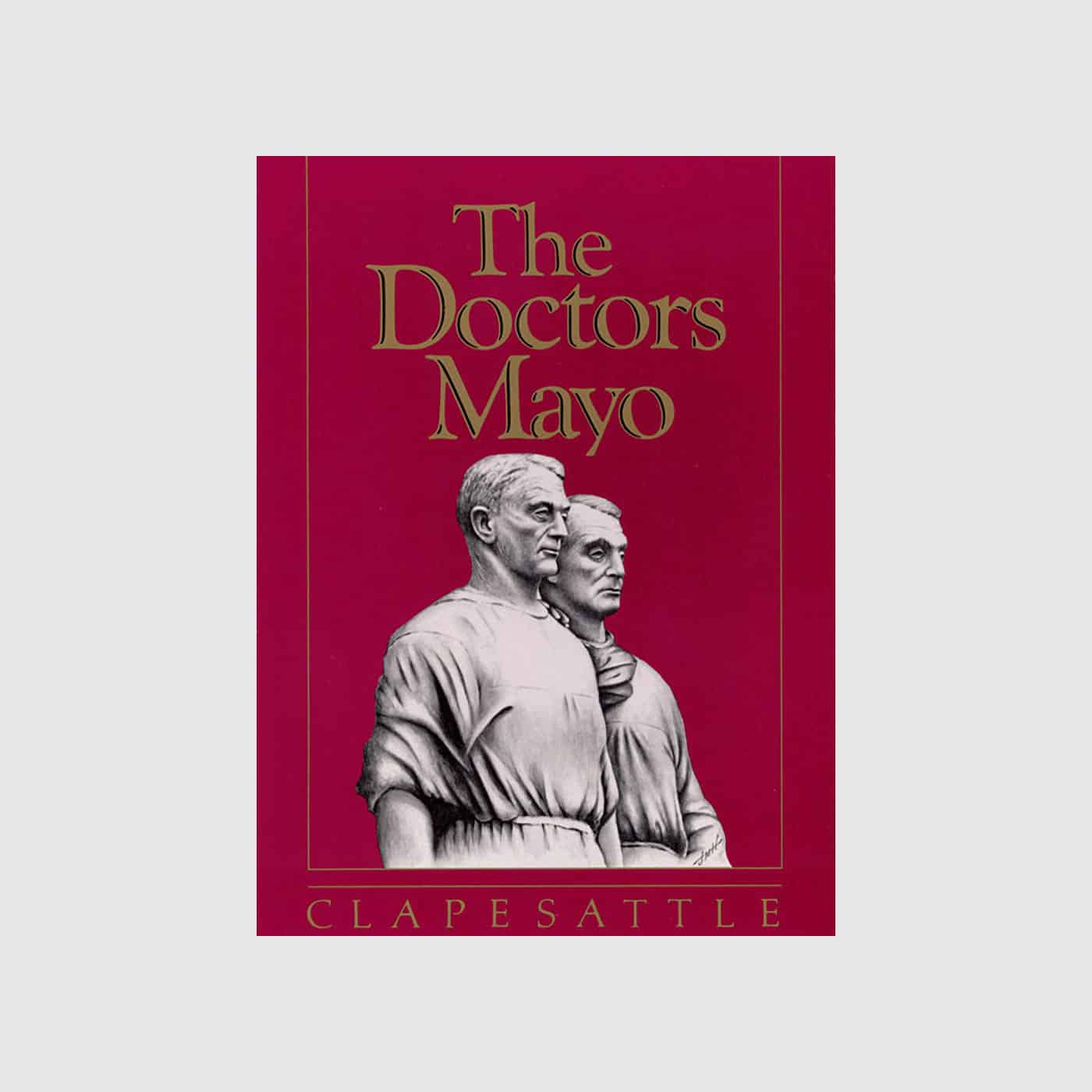
Relevant reading
The Doctors Mayo
The classic biography of a family of physicians and the medical center that bears their name. This book has been acclaimed as the authoritative biography of Dr. William Worrall Mayo and his physician sons since it first was published in 1941. Page count: 437