
A parade of witty and whimsical TV ads for Inspire — a Food and Drug Administration (FDA)-approved, surgically implanted device to treat sleep apnea — do a better job of explaining what Inspire isn’t, rather than what it is.
As the manufacturer’s slogan — No mask. No hose. Just sleep — emphatically points out, Inspire is not a CPAP mask with attached hose. CPAP stands for continuous positive airway pressure, and it is the most common treatment for the millions of Americans with obstructive sleep apnea (OSA).
What is obstructive sleep apnea?
Here’s a word-by-word breakdown of OSA: Obstructive refers to the blockage of the upper airway during sleep, which leads those with OSA to temporarily stop breathing, also called apnea. The apnea part usually comes at the end of a period of deepening relaxation and sleep. The more relaxed someone gets, the easier it is for the tongue and surrounding throat muscles to collapse the upper airway. This collapse makes it harder for the breathing muscle — the diaphragm — to pull air into the lungs. Of course, breathing is a primal necessity, so when the diaphragm starts pulling hard but no air is getting through, an alarm bell clangs deep in the brain: Wake up and start breathing!
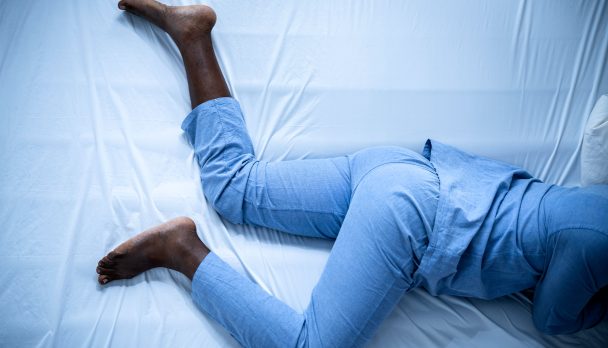
If you’ve had a chance to watch apnea in a person, it often looks like a cycle of deepening snores, followed by a rousing snort or two, and then a return to a quieter and more typical breathing pattern — until the tongue begins to relax again and the snoring-sliding-into-apnea cycle starts all over. (By the way, snoring is a common symptom of OSA, but it’s neither a prerequisite for nor guarantee of OSA.)
The fragmented and disrupted sleep of OSA can be exhausting. People with OSA sometimes wake up during these episodes, but the arousal is typically so brief (seconds) and light that they don’t remember waking up. They go to bed and believe they are sleeping all night, yet they wake up still feeling tired and unrefreshed. If the sleep deprivation is severe, they can easily doze off during the day — in a chair, at a computer, behind the wheel of a car.
Sleep restores the brain, and without it, mood and memory problems are common. Insomnia aside, the adrenaline surge that comes with every wake-up-and-breathe arousal is physically hard on the body, as are periods of low oxygen levels. OSA is particularly hard on the cardiovascular system and can lead to high blood pressure, heart failure and stroke.
The rap on CPAP
A CPAP mask — and tube and machine — work by maintaining a constant low level of pressure inside the upper airway that keeps it propped open. A CPAP machine is different from “breathing machines” — also known as ventilators — that can keep people alive if they’re in respiratory failure. Check out this Mayo video of CPAP working.
Like most things in our modern age, CPAP machines and masks have gotten increasingly sophisticated and user-friendly. There are now CPAP masks that can cover the mouth, just the nose or both. Even so, CPAP takes a little — or sometimes a lot — of getting used to, and the reasons are both personal and biological: Some people really don’t like having something over their mouths or noses. Like a gag reflex, this dislike is stronger in some people than in others. For people with a strong dislike, wearing a CPAP mask can be a claustrophobic WrestleMania bout.
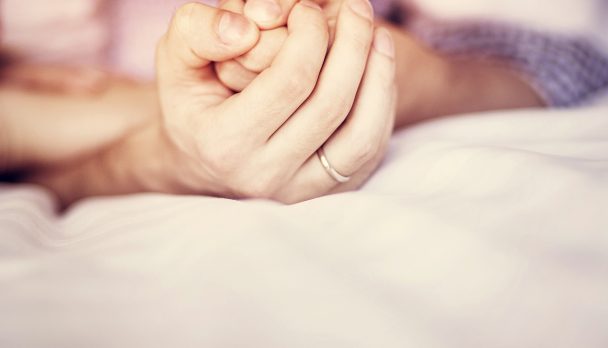
The Inspire ads use this epic mask difficulty — drowsy person trying to extract “silicone octopus” off face — to comedic and entertaining effect. They also smartly point out how disruptive all this is to a bed partner of someone with OSA. The fatigue of OSA is a buzzkill for one’s sex life, but so are separate bedrooms, and some of the Inspire ads play to that reality.
So yes, CPAP masks are not without challenges — this Mayo article describes how to avoid the 10 most common ones — but CPAP remains the safest, most predictable, most reliable and most effective treatment for OSA.
If Inspire isn’t a CPAP mask, then what is it?
In a visit to the Inspire website (as of publication of this article) you won’t find any detailed information about how the product works until you get to the video at the bottom. Here, you learn that Inspire is a neurostimulator. In the operating room, a wire — called a stimulator lead — is threaded under the skin, starting at the upper chest, then over the clavicle and up the neck to reach its final position near the base of the tongue. From there it can stimulate the nerve that triggers the specific muscles that push the tongue forward (and therefore out of the upper airway) every time a person inhales.
An implant — a small cartridge that houses the sensing software and a battery — is placed under the skin on the right side of the chest and connected to the stimulator lead. A remote-controlled device is placed over the implant to turn it on and off, a “See, it’s that easy!” moment depicted in many of the Inspire ads. This device can also be used to adjust therapy levels or to pause the device during a middle-of-the-night bathroom run.
Implanting the device is a low-risk, outpatient surgical procedure. There is likely to be some soreness, and about 1 in 5 people experiences tongue numbness, tingling and weakness that resolves in days to weeks. A similar percentage of people may experience tongue soreness from the tongue scraping across the bottom teeth, but this typically resolves with time or with settings adjustments. In the time between activating the device and falling asleep, many find that the tongue being stimulated with each breath is an unusual but not painful sensation, one they get used to.
Who qualifies for the Inspire device?
On the Inspire website you can find a questionnaire that asks why you’re interested in the Inspire therapy, and if you might qualify for its use. There are several options — CPAP mask discomfort, bed partner issues and others — but they all lead you to the same set of questions: Have you been diagnosed with OSA? Have you tried CPAP? Do you have trouble with CPAP? When was your last sleep study (less than or more than two years ago)? Then you enter height and weight for BMI and information to be directed to an Inspire doctor.
I am not an Inspire doctor (although I could be the stunt double for the doc on the website videos), but the Inspire website provides the initial screening criteria for adults age 22 or older, who must be:
- Diagnosed with moderate to severe OSA (AHI 15 to 100). The apnea-hypopnea index (AHI), where hypopnea refers to prolonged underbreathing, is used to grade OSA. Mild OSA is an AHI of 5 to 15, moderate is 15 to 30 and severe is anything above 30.
- Unable to use or get consistent benefit from CPAP. Later, the criteria qualify this in two ways: inability to use CPAP for more than four hours a night on five or more nights a week, and unwillingness to use CPAP. Where exactly inability meets unwillingness isn’t clear, but only half of CPAP users get to the level of 4 to 5 hours a night. (This is known because the CPAP machine is keeping track!)
- Not significantly overweight. Previously, a body mass index (BMI) of 32 or lower was required, but in June 2023, the FDA increased the BMI limit to 40.
If you meet those criteria, you’ll likely need an upper airway exam (also called a drug-induced sleep endoscopy) under light anesthesia to look at your upper airway. This is to confirm that the cause of the apnea is your tongue falling back rather than enlarged tonsils or some other anatomical issue. Depending on the situation, the doctor may recommend that you get a more detailed, updated sleep study. For some people, apnea is a brain signaling problem — called central sleep apnea — in which case stimulating the tongue won’t work.
Many are called, few are chosen
It’s estimated that about 30 million people in the United States have OSA but only 6 million have been formally diagnosed. This is a big problem in the search for a better treatment.
The good news is that in some people, Inspire can be as effective as CPAP. However, CPAP remains the gold standard therapy for OSA. The bad news is that many of those who are interested in Inspire won’t qualify. That’s primarily because about 60% of those with OSA fall into the mild category. In addition, as noted in a 2014 study that led to Inspire’s FDA approval, 25% of potential enrollees had either a nonobstructive sleep study result or a laryngoscopy exam showing that Inspire wouldn’t be particularly helpful based on their airway collapse patterns.
Keep those numbers in mind before, amid an insomnia-induced rage, you decide to toss your CPAP mask onto a funeral pyre or run it through the neighbor’s woodchipper. Come to think of it, those scenarios might make for a riveting Inspire ad.
Relevant reading
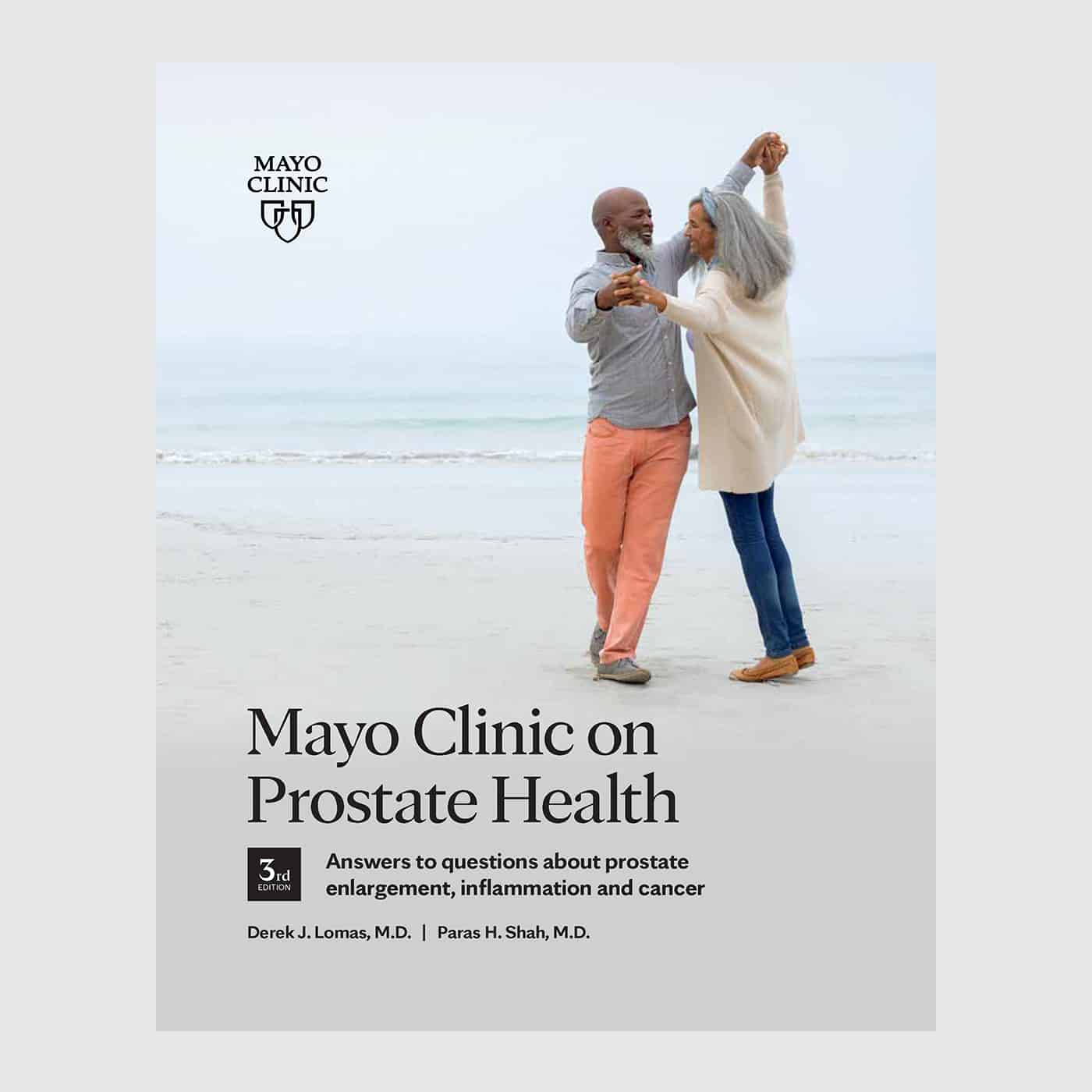
Mayo Clinic on Prostate Health, 3rd Edition
Mayo Clinic on Prostate Health, 3rd Edition is an easy-to-read yet comprehensive guide to preventing, understanding, treating and living with prostate disease. Advances in research, an explosion in sophisticated imaging technology and new medical procedures have allowed for earlier diagnosis of prostate disease and more personalized treatment.