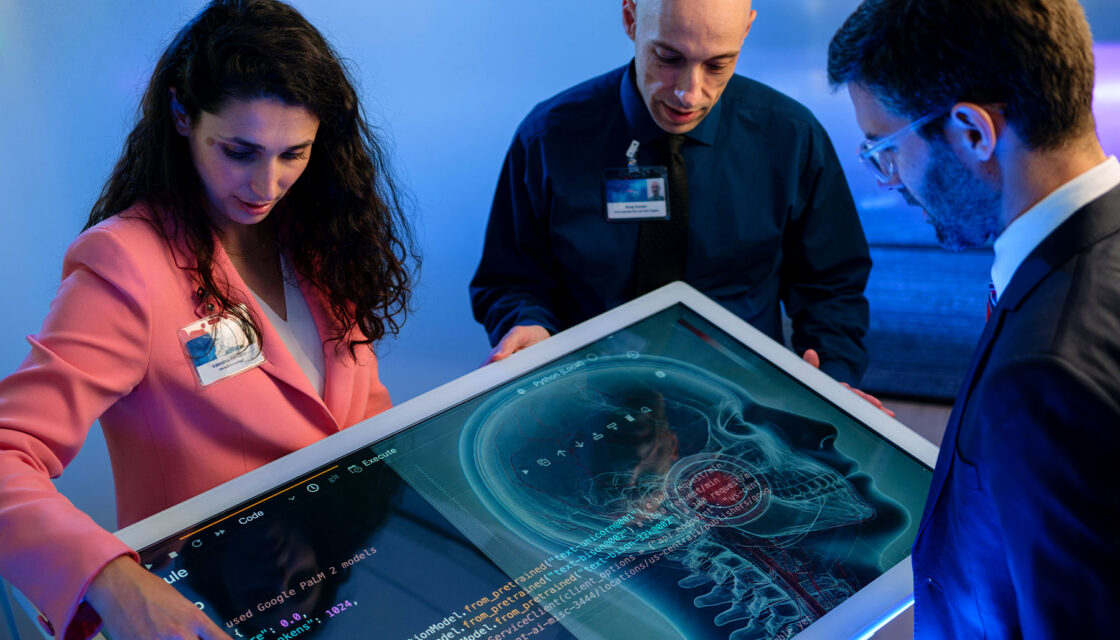
You may fear a future involving robot doctors. But a different outcome is more likely: Artificial intelligence — AI — has the potential to improve the work of human healthcare teams, making care more personal and effective, according to Mayo Clinic experts. It mostly involves tools that can work behind the scenes to provide results faster, open new treatment options, and possibly improve and prolong lives.
AI can shorten the time required to do administrative tasks — loading lab results and visit histories with the push of a button and a quick voice dictation rather than with hundreds of computer strokes. And AI can sort through massive reams of data with speed and precision, detecting warning signs of disease earlier than previously possible. Taking these tasks off the to-do lists of care teams may leave more time to spend with patients.
“If done right, AI will bring back more humanity to medicine and help us practice at the top of our ability,” says Paul Friedman, M.D., chair of the Department of Cardiovascular Medicine at Mayo Clinic in Rochester, Minnesota.
Discover Health Letters
Get full access to reliable information for a healthier life:
- Insights from over 3,700 physicians
- Deep dives into serious & complex conditions
- Curated latest medical research