How does healthcare in rural America really differ from care in the cities? It’s far more complex than making house calls and knowing every patient by name.
On this episode of Health Matters, Dr. Steven Furr of the American Academy of Family Physicians (AAFP) draws on more than 40 years of experience practicing rural medicine. He shares what makes rural populations unique, how tightly woven rural health systems truly are, and the everyday challenge of balancing the best prescription medications with what patients can realistically afford.
Listen to What happens when you’re the only doctor for miles
Read the transcript:
Kristein Meinzer: This is “Health Matters,” a podcast from Mayo Clinic where we discuss the latest medical advice, news, and research to help you live a happier and healthier life.
My name is Kristen Meinzer. I’m a writer and journalist, and in this episode, we’re talking about rural health.
Health challenges don’t care where you live, and rural areas are no exception. But a rural physician might be the only doctor for miles, which means they have to field every health problem you can think of, at some level or another.
Here to talk to us today about the life of a rural physician is Dr. Steven Furr. He’s a family physician from Jackson, Alabama, and former president of the American Academy of Family Physicians.
Dr. Furr, thank you for joining us today. We’re so happy to have you with us.
Steven P. Furr, M.D.: Glad to be with you.
Kristein Meinzer: Let’s talk about how you decided to practice medical care primarily in rural communities. Why rural?
Steven P. Furr, M.D.: When I was a younger person, I lived in a small rural area. I saw the needs there, and I remembered a general practitioner who took care of me and all of my family, all that he was able to do. I knew it was an area where I could make a difference.
When I and my partner first came here to Jackson, Alabama, they had never had a board-certified family physician in their community. They didn’t know what a board-certified physician was. We felt like we raised the standard of care in the community. So I actually went to a rural area, and I stayed there, and I’ve been there now 40 years.
Kristein Meinzer: Wow. When we talk about rural health, what does that mean? What does that encompass?
Steven P. Furr, M.D.: It depends on who you talk to. Living in a rural area in Jackson, Alabama, our definition of rural used to be if you didn’t have a Walmart. However, after we got a Walmart in town, that kind of took away the definition.
I think, particularly when you talk about healthcare, there’s something called the “healthcare professional shortage area,” and that’s actually defined by the government. So to be considered a shortage area, you’ve got to have 3,500 patients to every one physician or provider.
If you look at a state like mine, like Alabama, Of all the counties in our state, there are only five counties that are not considered healthcare provider shortage areas. There are a lot of areas that people would not see as being rural, but are still underserved. So a lot of it depends on the population density.
Kristein Meinzer: Got it. When we’re talking about the population, who are the people who live in rural areas?
Steven P. Furr, M.D.: For one, they tend to be older. Generally, they tend to be people who are multi-generational. You don’t get as many people moving in and out.
I think one of the things is those populations are continuing to shrink. A lot of the time, the young people would leave and not come back after they went to school or found jobs somewhere else.
They also tend to be sicker with multiple problems.
Something that is really affecting us that we’ve just noticed in the last decade or so: Most people, when they lived and grew up in a rural area, would retire there, and they would die there.
What we’re finding now is a lot of our people, when they retire, now they’re moving to the population centers to be with their kids, to be with their grandkids. So we’re losing people at both ends of the dynamic, which is really hurting the rural areas.
Kristein Meinzer: Just to get a big-picture overview: What are common health problems or challenges that folks in rural areas generally face?
Steven P. Furr, M.D.: We see more heart disease, more obesity, more diabetes. Unfortunately, we still see a fair amount of smokers. They often are not quite as well-educated.
And again, because they don’t have access to the specialist, or it’s difficult for them to get to them, a lot of the things that you would normally send to someone else, we take care of that while they’re in the office.
Kristein Meinzer: Do you notice certain attitudes that might be different than in rural areas? Are people, for example, more likely to feel guarded about their private lives because, “Oh, this town is so small, everybody knows my business.”
Or are they more likely to feel like, “You know what, we’re all in this together. You all know my stuff anyway?”
Steven P. Furr, M.D.: Some of them are more guarded. Like some females won’t come here and get a pap smear, and they feel like they need to go somewhere else. But most of them are not. Most of them know that we’re professionals.
And that’s one of the things we’ve preached to all of our staff: I don’t care if they’re your best friend or who they are, there’s a professional relationship. Nothing goes out of this office. And our patients have learned to trust us over time and to know that.
I think the biggest thing for people in the rural area, they just tend to be more stoic, and they just tend to tough it out. The bad thing about that is they often don’t come in if something’s really bad.
We all know our patients, and you know certain ones who come in every week, because they just need to talk. You know Tom only comes in if his wife makes him. So when he comes in, he is not going to tell you what’s going on, but you’d better find out what’s going on because it’s something bad.
You just know your patients and know that’s somebody you really have got to look at real closely.
Kristein Meinzer: Yeah. What kinds of techniques do you enlist to try to help patients feel at ease or to get them to open up?
Steven P. Furr, M.D.: It helps if their spouse is with them, because their spouse is the one that made them come in and everything. And most of the time, our office is like family to most of our people, so our nurse really warms them up, is very receptive, very open to them. So they go and talk to them.
Occasionally, the patients will not tell the nurse what’s going on or they’ll tell them one thing, but that’s not the reason they’re here. And then they’ll tell me when they go in.
And we laugh because the nurse’ll say, “Well, they didn’t tell me that, but they told you that.”
It’s mainly just communicating with ’em and knowing them, being gentle, and just trying to work with their comfort zone.
Kristein Meinzer: Now, you said that in your experience growing up, the doctor in a rural area was taking care of everything for you, and probably taking care of hundreds more patients than they would probably take care of in, perhaps, a city environment. Because you said earlier, you said earlier that there was one practitioner for 3,500 patients.
One in five people in the US lives in rural areas. That’s a lot of people. Why then, is it so hard to find a doctor in those areas? I mean, 20% of the population’s there. What’s going on?
Steven P. Furr, M.D.: I think we are in a crisis. And it’s a really big crisis.
Part of it’s due to reimbursement. In rural areas, you tend to see more Medicare and Medicaid patients, which often don’t reimburse as well as some of the private insurances like Blue Cross. So often, you can make more money in an urban area than you can in a rural area. Those insurance dynamics do play a role in that.
You also tend to see more uninsured in rural areas, and because you’re the only provider, we see whatever comes in the door. So we have to take care and meet those needs.
Part of it’s just that we can’t find people to come and practice in rural areas. And there are multiple reasons for that: Some of it is lifestyle, some of it is just money. Our medical students are coming out with an enormous amount of debt. I can’t imagine coming out with the amount of debt — some medical students are now at half a million dollars. And they feel like they have to take a job that’s the highest-paying, to get that back.
I think some of them are scared to come out because they’re afraid that it’s kind of overwhelming. They really don’t know how much they can do until they’re challenged to do that. So I think that’s why it’s important to get them out there.
Kristein Meinzer: “Rural” can mean different things to different people — but from a healthcare perspective, one doctor per 3,500 people is considered a healthcare professional shortage area.
Being a rural doctor is challenging. Rural physicians have to be able to handle all kinds of different ailments, and they often end up treating multiple conditions in a single visit.
But let’s drill down into what factors make rural medicine uniquely challenging — and why having a local clinic is so important.
You already mentioned that the patients in rural areas often tend to be older. They may be more likely to be smokers. What other specific challenges do you see with folks who live in rural areas that maybe we see less often in urban areas?
Steven P. Furr, M.D.: Well, we see it everywhere, but it’s a real problem in our area, and that’s obesity. Obesity leads to so many other things: increased hypertension, increased heart disease, increased osteoarthritis, more people having to have their knees replaced, increased incidence of congestive heart failure, and diabetes.
And part of that goes back to their social determinants of health: the other things that affect their health, other than just their healthcare.
Often, the nutrition is not as good in rural areas. Although you would think we would have a better supply of more nutritious food, sometimes it’s easier for them to get fast food and things that are not as nutritious. So that contributes to some of the healthcare problems.
Kristein Meinzer: And what about socioeconomics? Rural residents do tend to have a higher rate of poverty than urban residents. How does that factor in?
Steven P. Furr, M.D.: It makes it really difficult. Because even if they have prescription drug coverage, they often have copays on their medicines. And it’s almost every week somebody comes in and says, “Doctor, I can’t afford this medicine.”
But it’s not necessarily that they don’t have insurance, but they got four drugs that have $35 copays. And they’ll say, “Doctor, this is over a hundred dollars a month. I can’t afford this.”
Sometimes I have to give not the best medicine, but the medicine they can afford. Because the worst medicine I can give them is the one they can’t afford and they don’t take. Because it doesn’t do them any good.
So we have to be really sensitive to that. A lot of these people are very proud people, and sometimes they just won’t tell you. And they won’t pick up the prescription.
They go to the pharmacist, and they say, “This is going to be $35, this is going to be a hundred dollars.” They say, “I can’t afford that,” and they won’t tell us. They go without that medicine for months.
You need to address that with them upfront and say, “Hey, if this medicine is too expensive, you can’t afford it, call us back. We’ll work with you.” But you have to be very sensitive about that.
And for us, we might not think a copay of $25 or one medication that much, but if you’ve got somebody who’s diabetic and has congestive heart failure, they might be on seven or eight medicines. And the copays alone are a tremendous amount of money for them, who might be just on a social security check every month.
Kristein Meinzer: I imagine there are major infrastructure and resource issues also related to all of this.
Like, let’s say somebody in a rural area needs to get to the doctor and something’s happening with their car. There’s probably not mass transit available in most rural areas like in urban areas, right?
Steven P. Furr, M.D.: It is not “probably not.” This is not available. We don’t have Uber in Jackson, Alabama. So a lot of things that people in urban areas take for granted, we just don’t have.
For somebody who doesn’t drive, it’s a real issue. And sometimes they have to pay ridiculous amounts of money to get somebody – if they don’t have family – to just drive them to the local doctor’s office, much less if they need to see somebody in a town 80 miles away.
So when they come to me, and I say, “We really need to send you to the next big town for this.” They just say, “I can’t afford it. I can’t go there. We’re going to have to find some other way to deal with this.”
Kristein Meinzer: Yeah. That makes a lot of sense.
Also, you mentioned earlier, access to healthy food options. That must factor in also to what you are treating and what your patients are struggling with, right?
Steven P. Furr, M.D.: I think the difficulty is that healthy food tends to cost more. So when you’ve got somebody who’s on a limited budget, they tend to gravitate toward the foods that they can afford.
It’s often those ultra-processed foods that are high in calories that are the most affordable, whereas they can’t get nearly as much fresh fruits and vegetables with the same amount of money.
Kristein Meinzer: Yeah. And those ultra-processed foods, they’re really lacking in nutrients and fiber and all of the other things the human body needs to function well.
Steven P. Furr, M.D.: Plenty of calories and plenty of sodium. The two things we don’t need them to have.
Kristein Meinzer: Yeah. Let’s talk about small community hospitals and clinics. What role do those play in rural healthcare, and what unique challenges do they have to confront?
Steven P. Furr, M.D.: I think the thing that people don’t realize is how much that adds to the whole community. And it’s only after you lose that in a community, they realize what they lose.
For an example, generally, if you lose your hospital — people don’t think about this, but the next thing that you lose is your ambulance service. Because if you don’t have a hospital that generates those transfers, usually an ambulance service can’t meet it.
So suddenly you don’t have an ambulance to take you to the next big city, which might be 80 miles away.
Once you lose that hospital, you lose all the other services that are provided within that. Just like, when you lose your hospital, usually you’re going to lose your emergency room.
So if you’re having a heart attack, instead of being seen at your local emergency room in 10 minutes, you might be 30 to 45 minutes away before somebody can take care of you. If you can even get the ambulance to get to you to take you to that area.
And then you lose the people in the community. Because if you lose the hospital, then most doctors are not going to stay in the clinic, because they can’t do the things they need to do. Then you lose the doctors in the community. You lose your nurses. So you lose a lot of these professional people that add to the culture of the community, and access for people, and those types of things.
As we see more rural hospitals close, along with that, more rural clinics close. We’re going to have an increasing healthcare crisis. All those chronic problems are going to tend to escalate, because we’re going to move away from prevention to going back to treating acute problems that could have been prevented.
Kristein Meinzer: What’s the relationship between your clinic and the hospital in your community?
Steven P. Furr, M.D.: We’re fortunate. Our clinic is right across the street from the hospital. And we made a decision a long time ago that we need to survive for the hospital to survive, and the hospital needs to survive so that we also survive. So we’re all in this together.
But what we have found is that by being here, what we’re able to provide wouldn’t be here otherwise.
Because we’re here and we have a clinic, we can get other specialists to come here once a week, every other week to see patients, so our patients don’t have to drive all the way to another city, 80 miles away.
For example, today in my office, we have a gastroenterologist here from Mobile, Alabama, 80 miles away. So he’s seeing 60 patients today who would normally have to go to Mobile to see him.
We have a dermatologist in every other week. We have a cardiologist in every week. All those services would not exist if our clinic were not here, because they wouldn’t be coming here.
Kristein Meinzer: What are some workarounds you’ve come up with when you can’t get a specialist out there, for whatever reason?
Steven P. Furr, M.D.: When we first came here, we had two optometrists. Now we don’t have any. So what we did, we made the decision: We bought a machine that actually does retinal scans.
So for our diabetics, we can do a retinal scan. We can send those off, have the photographs looked at by a board-certified ophthalmologist, and we can make sure they don’t have diabetic retinopathy.
But if our clinic didn’t exist, all those people would not be getting their diabetic eye exams.
Another example is my partner found a lady who was really interested in doing toenails. That was kind of her passion for helping older people. So she comes to our office twice a week. We bring in our diabetic patients, so she does their toenail trimmings for them. Most of them can’t trim their toenails. They don’t have a family member who can adequately do that.
It’s amazing what that means to people, particularly the elderly people who can’t get down there and do that. And then when they’re seeing her, we see them, examine them, checking them for neuropathy, make sure they don’t have any infections, those kinds of services they wouldn’t get otherwise.
They come in every three months, get their toenails done. I mean, we don’t paint them, we just trim them. But it’s amazing what a difference that makes for them. They talk about how good their feet feel. And they’re just so excited about that.
Kristein Meinzer: I also imagine that you are the jumping-off point for a lot of patients to talk about mental health.
Steven P. Furr, M.D.: At least a third of our visits are mental health-related, depression, and anxiety. Because there are just no other resources. There is a county mental health, but it’s hard to get in there. And as family physicians, that’s a large part of what we do anyway, all the time.
And the advantage of being in a small rural community, I often know what’s going on in the community anyway. And I know their grandmother just died. We just had two horrible ATV accidents where a child and a man died.
I know those things because I know the news and keep up in the community. So when those families come in, I already know what’s going on. I know the stresses that they’re dealing with.
Kristein Meinzer: The healthcare challenges in rural communities are myriad: Chronic conditions, health literacy, socioeconomics, access to affordable food, and limited transport options can all combine to make it difficult for someone to get the healthcare they need. That’s why being a rural physician requires flexibility, problem-solving, and tenacity.
But beyond serving patients, those doctors also play an important role in maintaining the presence of health infrastructure, like hospitals. And if you lose a hospital, that means you’re also losing critical services, like a rapid ambulance and a nearby emergency room. Hospitals, clinics, and specialists all support each other’s practices – and if one leaves, others might follow.
That said, it’s not just about the medicine: it’s also about the people and their stories. Let’s hear some of those next.
Can you tell a story about a patient you’ve had or a case that really exemplifies the unique challenges of practicing rural medicine?
Steven P. Furr, M.D.: I had an elderly gentleman who was diabetic and his diabetes was really poorly controlled. We used every oral medicine for diabetes I could possibly think of that his insurance would cover. We never could get his A1C under nine, which was high.
I noticed every time that he came in, he had urinated on himself. He was just incontinent. And that was just because his diabetes was so high – he had glucosuria, so he urinated on himself.
My nurse and I talked. What else could we do? We then decided we were going to use an injectable once a week medicine. We didn’t think he could understand how to do an injectable medication, particularly insulin.
We set up home health to go out once a week and give this injectable medicine, in addition to the oral agents he was taking.
While they were there, they were also making sure he was taking those medicines as he should. After doing this, in a few months, his A1C, which was never under nine, now runs under seven all the time.
When he comes in, he’s never incontinent of urine because his sugar’s under control now. His diabetic eye exam is normal. He has both his feet because we’re checking his foot care. And he’s happy and content. And otherwise, this gentleman would’ve probably been dead a couple of years ago, or either have lost his foot, or his kidneys would’ve failed.
Kristein Meinzer: That’s incredible. Taking the time to be not just a doctor, but to be there in a non-judgmental, supportive way resulted in a cascade of benefits. What’s something you wish more of your patients knew?
Steven P. Furr, M.D.: People underestimate the importance of preventive healthcare. We’ve got to get away from this: treating the heart attack after it happens, or treating the diabetic foot after they’ve already got an ulcer, and are going to lose their foot.
I think of a guy just recently, they changed the colon cancer screening to everybody above 45.
I had a gentleman, he was 47. And hadn’t had any real major problems, but I encouraged him to get his screening. And he just, a couple of weeks ago had a colonoscopy, and he had a large colon cancer in his transverse colon. And he went in and had that resected.
He’s healthy, and I saw him in the office just two days ago, and he’s doing fine and recovered well from his surgery. That gentleman would’ve been dead in a year or two, and they would not have known what he died from unless they did an autopsy. That’s what we’re here about, to prevent those problems and take care of him.
It’s those kinds of things, let people continue to have a healthy, productive life that they wouldn’t have otherwise.
Kristein Meinzer: When someone’s more hesitant around preventive care, how do you try to get through to them?
Steven P. Furr, M.D.: I think one thing that’s really helped is we’re doing wellness at every visit. Whether they’re sick or not. It’s a rare visit. Like in this season, more of my flu shots are given to somebody who comes in for a sick visit than comes in for a well visit. And we found that there are a lot of people who are not going to go somewhere else to get their immunization.
They’re not going to go to a pharmacist. And often we can convince them to get their COVID shot or their flu shot that they would not get otherwise.
They might come in for a hypertension check or diabetes. The nurse will immediately say, “Do you want to get your flu shot while you’re here?”
Every time we see them, we’re checking and say, “Hey, it’s been two years since you’ve had your mammogram. Do you want us to go ahead and schedule that while you’re here? I know you’re here for your diabetes, but we need to do that.”
Or we’ll see ’em and say, “Hey, you haven’t had your colonoscopy in 10 years. You want us to schedule that while you’re here? I know you’re here for your hypertension, but we need to do that too.”
So wellness for us is an everyday visit.
They get into that once you’ve kind of trained them in that wellness-type attitude.
Then they start saying, “Oh, while I’m here, it’s time for my mammogram.” Or, say “I’m here, and I think I’m due to get some blood work.’”
Kristein Meinzer: You’re teaching them how to advocate for themselves, and that’s something they can take with them everywhere, not just at the office.
Steven P. Furr, M.D.: Yeah.
Kristein Meinzer: Just to turn the tables here, what lessons have you learned from your patients as a rural doctor?
Steven P. Furr, M.D.: First off, always listen to them. Sometimes you’ll go into the room, and you’ll have a preconceived notion of what’s going on. You’ve seen records. I remember one lady, the nurse says, “I think they’re just here for pain medicine.”
And then I went and talked to them, and then I actually got the x-rays and they had broken ribs. I thought, “Yeah, they do need pain medicine.”
Listen to the patient. Listen to their story, listen to what’s going on, because they’ll tell you what you need to know most of the time if you just listen. And don’t ask too many questions, sometimes you got to be directed on the questions, but let them kind of tell their story.
Always be looking for how you can change your practice. I mentioned doing the retina scans when we didn’t have an ophthalmologist. I mentioned doing the toenails and doing that kind of thing.
And then we recruited a specialist to come up and say, “Hey, can you come up here once a week?” Cardiologist. “We’ve got all these patients that you can see,” just working to fill those niches that wouldn’t be there otherwise.
We do the same thing with the hospital. We’re continually meeting with the hospital administrators and what services we’re not providing in the community.
So we’re looking at trying to get a new CT scanner where we can do low-dose CT scans, looking for lung cancer in patients who smoke. So, trying to meet all those niches, but doing it here where people would probably not do that otherwise.
Kristein Meinzer: That is Solutions Medicine right there. Speaking of solutions, has the increase in the popularity of telehealth been helpful in your practice?
Steven P. Furr, M.D.: Well, telehealth does have its niche. One of the big problems is just the lack of broadband in rural America. A lot of our patients just don’t have internet, period.
And if they do, it’s extremely slow and not much more than dial-up. So, we use it to some extent, but it is really limited.
There are some exciting things going on. There are some grants, and if you ride along the rural roads now, you can see they’re putting fiberglass lines in. But it’s probably going to be two or three years before that’s up and available.
But just about everybody has a phone. We do a lot of chronic care management. So what happens, every month, people who have multiple medical problems — every month, one of our nurses calls them, checks on them, sees how they’re doing.
“Are your medicines up to date? Do you have any specialist appointments coming up? Do we need to do any refills?”
They’re in continuous contact with them every month. They want to make sure they’re managed well.
Kristein Meinzer: If you had a crystal ball, what would you say is going to change in rural healthcare in the next decade or so?
Steven P. Furr, M.D.: I think the thing that, to me, is really going to be exciting is just the technology changes.
The next step is a handheld ultrasound in your office. I think what’s going to be good with that, as our artificial intelligence gets better, you’re not going to have to be a radiologist to be able to read that ultrasound.
So I think you’ll have handheld ultrasounds that you’ll be able to put on somebody’s heart, and then your AI will be able to tell you they’ve got an injection fracture of 35%, they’ve got mitral stenosis, and that type of thing.
Your stethoscopes within a year or two, it’s going to have built-in AI, so that when you put that stethoscope on your chest, it’s going to tell you that they have an aortic insufficiency murmur. It’s going to tell you that they’re atrial fib.
Our diagnostic tools are going to get better, and a lot of those tools are going to be things we’re going to have right on the bedside, which for us as family physicians is exactly what we’re going to need.
Your ability to diagnose things in the clinic at the clinic bedside is going to markedly increase.
Kristein Meinzer: Now, Dr. Furr, what parts of rural medicine are rewarding for you personally?
Steven P. Furr, M.D.: The thing is being able to make a difference for patients. Part of the joy for me is seeing patients. Patients I might have delivered, and now they’ve grown up, and they’ve got their kids. We have a relationship. They trust me, and I trust them.
When my partner and I first came here 40 years ago, they’d had physicians come and go every few years, and every year somebody would ask us, “Are you going to stay?”
And they don’t ask us that anymore. We’ve been here long enough, so they do have that comfort. They do ask, “Are you going to retire?” Because they’re worried about that, but they don’t ask if we’re going to leave.
Kristein Meinzer: I don’t want to be a Debbie Downer here, but when you do retire, do you have any concerns about what’s going to happen after that?
Steven P. Furr, M.D.: I mean, it’s a concern. As I look around the state of Alabama, and I look at just the number of family physicians that are over 65, if they were all to retire, we’d have whole counties that would have nobody to take care of them. And many of them have chosen not to retire just because they do that.
Our little town of 4,500 people with a 32-bed hospital and our clinic just got approved for a rural residency for family practice residents. So we’re looking at actually having family practice residents train here in our clinic and our hospital starting in 2027.
What we found is that when you tend to train them in these areas, they’re more likely to stay in these areas.
Kristein Meinzer: You clearly are comfortable in this area, but it also sounds like there’s a lot more unique challenges being a rural doctor: the number of hats that you have to wear, the lack of resources. For all the listeners out there who live in rural areas, are there resources that you’d like to point them to?
Steven P. Furr, M.D.: Well, I think the biggest thing is to make sure they have a primary care provider, particularly a family physician. Those are sometimes very hard to find, but it’s very important to have that continual relationship. Because they know you and you know them, and that makes a tremendous amount of difference.
Me being able to know my patients and know who they are, and I can tell you I might not remember their name when I see them in the grocery store. In the office, I can tell you about every one of their problems. I know every one of their medicines.
For me, the continuity of care is what it’s all about. I couldn’t imagine seeing a patient one time doing one thing, and they’re gone, and you never see them again. It’s that relationship that makes all the difference.
I will say one other thing. AAFP, the American Academy of Family Physicians has familydoctor.org. That pretty well gives you any kind of information you want, if you want to look for something and say, “I wonder if this is a real problem,” to look it up as a great resource.
Kristein Meinzer: Well, I’ve got to say, hearing you talk about your work, you clearly have a lot of affection for what you do and for your patients. Thank you so much, Dr. Furr. This has been a great conversation. I’ve so enjoyed talking with you
Steven P. Furr, M.D.: Thanks so much. I enjoyed it.
Kristein Meinzer: Rural physicians can do a lot to educate and build strong relationships with their patients, especially when it comes to preventive care. But as Dr. Furr said, listening to patients can also teach doctors how to be better care providers.
Right now, the future of rural medicine has both precarity and hope. While there’s a shortage of healthcare providers in rural areas, folks like Dr. Furr are working to create opportunities for people to train in rural areas in hopes that they’ll go on to serve those communities long term.
And future technological advances like AI diagnostic tools could be game-changers in helping doctors provide more informed and comprehensive care for folks in resource-limited areas.
And if you yourself live in a rural area, hopefully you have a robust ongoing relationship with your local primary care provider – and if not, now’s a great time to start. If you have any questions in the meantime, you can check out familydoctor.org, where the American Academy of Family Physicians has all sorts of resources. We’ll put a link in the show notes.
Okay, that’s all for this episode. But if you’ve got a question, a topic suggestion, or a follow-up question about this episode, you can leave us a voicemail at (507) 538-6272 — we might even feature your voice on the show!
For more “Health Matters” episodes and resources, head to mayoclinic.org/healthmatters. And if you found this show helpful, please subscribe, and make sure to rate and review us on your podcast app — it really helps others find our show.
Thanks for listening, and until next time, take care and stay healthy.
Sign up to receive Mayo Clinic Press emails.
Find us online at Mayo Clinic Press for more health and wellness articles, podcasts and books.
Do you have feedback, questions or topic suggestions? Email us at mcppodcasts@mayo.edu.
Relevant reading
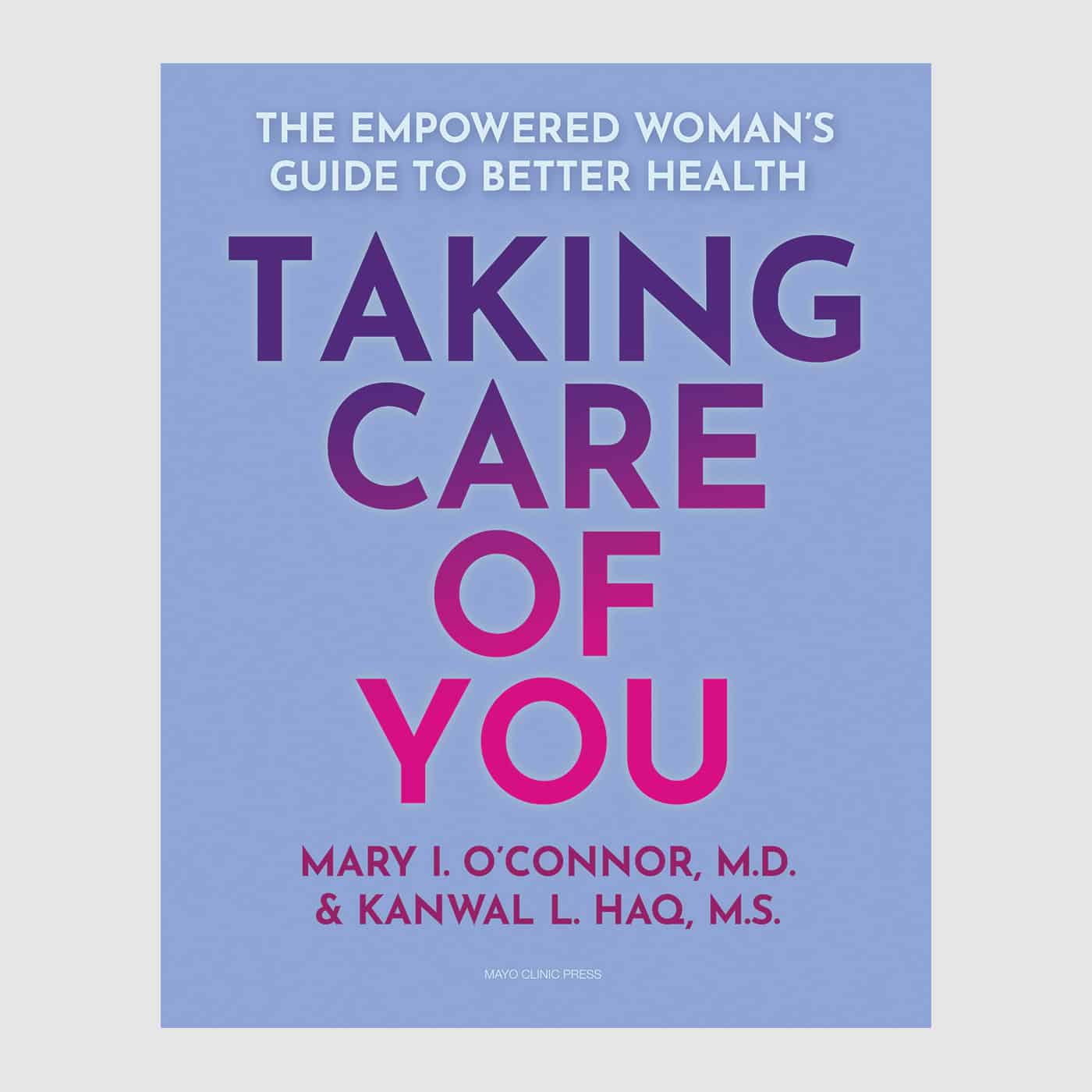
Taking Care of You
A practical and extensive resource guide for women who want to understand and take charge of their own health and healthcare, presented in short, focused, easy-to-read chapters.