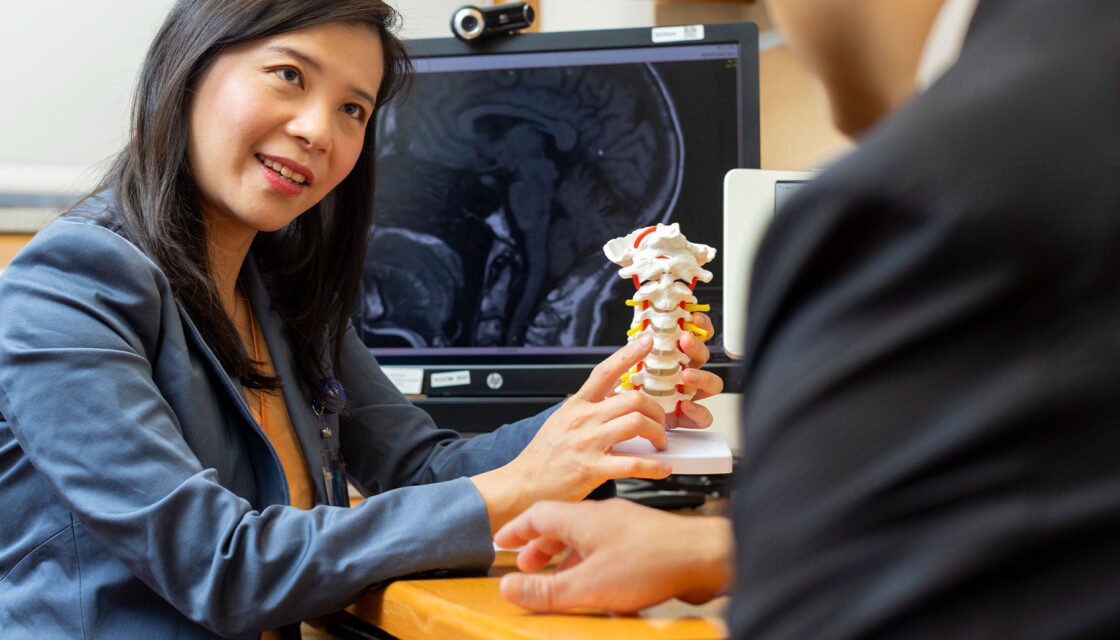
Cervical spinal stenosis occurs in the neck and affects about 5% of adults over 50 years old. It’s a leading cause of spinal cord damage, also called myelopathy. A related condition, called lumbar spinal stenosis, is more common and occurs in the lower back.
Wherever it occurs, spinal stenosis most often results from wear and tear over time. In fact, by age 50, most people have at least some signs of age-related deterioration in their spines.
Sometimes these changes can put pressure on the spinal cord and nerves. For severe spinal stenosis, your healthcare team may recommend surgery. However, conservative, nonsurgical treatments typically are used first to help ease symptoms.
Discover Health Letters
Get full access to reliable information for a healthier life:
- Insights from over 3,700 physicians
- Deep dives into serious & complex conditions
- Curated latest medical research