
Kathryn Carroll witnessed her grandmother’s vision decline over time. Late in life, her grandmother saw the world only in shadows, listening to her beloved soap operas and Minnesota Twins baseball games instead of watching. Carroll’s father faced a slower but similar decline. Both lived with the same condition: age-related macular degeneration. And for both, the condition progressively caused legal blindness.
In 2008, a trip to the eye doctor by Carroll, then 59, to ask about vision surgery resulted in a diagnosis of the same condition. However, the doctor assured her that her life wouldn’t be as affected thanks to better treatment options being available.
“I wanted to believe him, but it was hard to after seeing what my grandmother and my dad experienced,” she says. “But at the same time, it gave me so much hope.”
What is age-related macular degeneration (AMD)?
Age-related macular degeneration (AMD) is a chronic eye disease that develops when tissues of the macula begin to deteriorate. The macula is part of the retina, the light-sensitive lining at the back of the inner eye. The macula is responsible for the central area of the field of vision and the ability to clearly see fine details.
Types of AMD
There are two forms of AMD:
Dry AMD — About 75% of people with AMD have the dry form. However, it only accounts for 10% of legal blindness caused by AMD because it develops slowly.
Scientists don’t know exactly what causes dry AMD. The hallmark sign is clumps of cellular waste, which are called drusen.
An eye doctor can see drusen during an eye exam. Small clumps may not cause any noticeable changes in vision. However, larger drusen can develop and merge, leading the light-sensitive cells of the macula to break down the breakdown and causing gradual vision loss.
Wet AMD — This form, also known as exudative AMD or neovascular AMD, comes on more abruptly. It is responsible for most severe vision loss with AMD. Wet AMD starts as dry AMD. At some point in the disease process, new, atypical blood vessels begin to grow within the macula. These fragile new vessels are prone to leaking blood and fluid beneath the macular tissues, causing swelling. Eventually this may lead to damage and scarring of areas critical to central vision.
It is responsible for most severe vision loss with AMD. Wet AMD starts as dry AMD. At some point in the disease process, new, atypical blood vessels begin to grow within the macula.
Symptoms of dry and wet AMD
Both types may cause:
- Blurred vision, causing a gradual haziness and difficulty seeing fine details such as small type. Street signs or faces may be harder to see.
- Visual distortions, in which straight lines appear bent or wavy.
- Dulled colors.
- Trouble adjusting to low light.
- Dark spots in your vision or the need to scan your eyes around to get a complete view of an object.
In developed countries, AMD is the leading cause of severe vision loss in people 60 and older. Still, it causes vision loss in just 15% of those who have the condition. It doesn’t cause total blindness since side (peripheral) vision isn’t affected. But the decline and possible loss of central vision can impact your ability to read, drive, cook and enjoy hobbies and other pursuits.
There’s no cure for AMD. But improved treatment options can help delay vision loss and preserve the vision you have — and in some cases even reverse some vision loss.
Like what you are reading?
Subscribe to the Mayo Clinic Health Letter today!
Treatment options for wet AMD
Treatment for wet AMD typically includes medications that block a specific protein called vascular endothelial growth factor (VEGF). VEGF triggers new blood vessel growth and leakage.
These drugs are called anti-VEGF drugs:
- Aflibercept (Eylea)
- Bevacizumab (Avastin)
- Faricimab (Vabysmo)
- Ranibizumab (Lucentis)
These drugs are injected into the eye every 4 to 6 weeks at first. Research has shown that they’re significantly more effective when treatment starts soon after diagnosis.
Slowing the progression of dry AMD
There’s no specific treatment in the earlier stages of dry AMD. But it’s important to address risk factors. Stopping smoking may have the strongest effect on slowing the progression of AMD.
For intermediate to advanced dry AMD, there’s a specific supplement formulation with antioxidant properties that helps reduce risk of further progression in around 25% of people.
For people with intermediate to advanced dry AMD, supplements with specific amounts of antioxidants may help slow the disease in about 25% of people. The formulation of these supplements — often referred to as AREDS2 — includes:
- 80 milligrams (mg) zinc (zinc oxide)
- 2 mg copper (cupric oxide)
- 500 mg vitamin C
- 400 international units (IU) vitamin E
- 10 mg lutein
- 2 mg zeaxanthin
How can you prevent AMD?
Here are 7 tips for AMD prevention:
- Don’t smoke.
- Eat a heart-healthy diet emphasizing a wide array of minimally processed plant foods such as fruits, vegetables and nuts — with a focus on fish as a protein source.
- Limit or don’t drink alcohol. Moderate alcohol use for healthy adults means up to one drink a day for women and up to two drinks a day for men.
- Get 30 to 60 minutes of moderately intense physical activity 5 to 7 days a week.
- Maintain a healthy weight.
- Manage cardiovascular risk factors such as high blood pressure and unhealthy cholesterol levels.
- Minimize exposure of the eyes to sunlight, such as by wearing sunglasses that block ultraviolet (UV) light.
This article originally appeared in the Mayo Clinic Health Letter.
Relevant reading
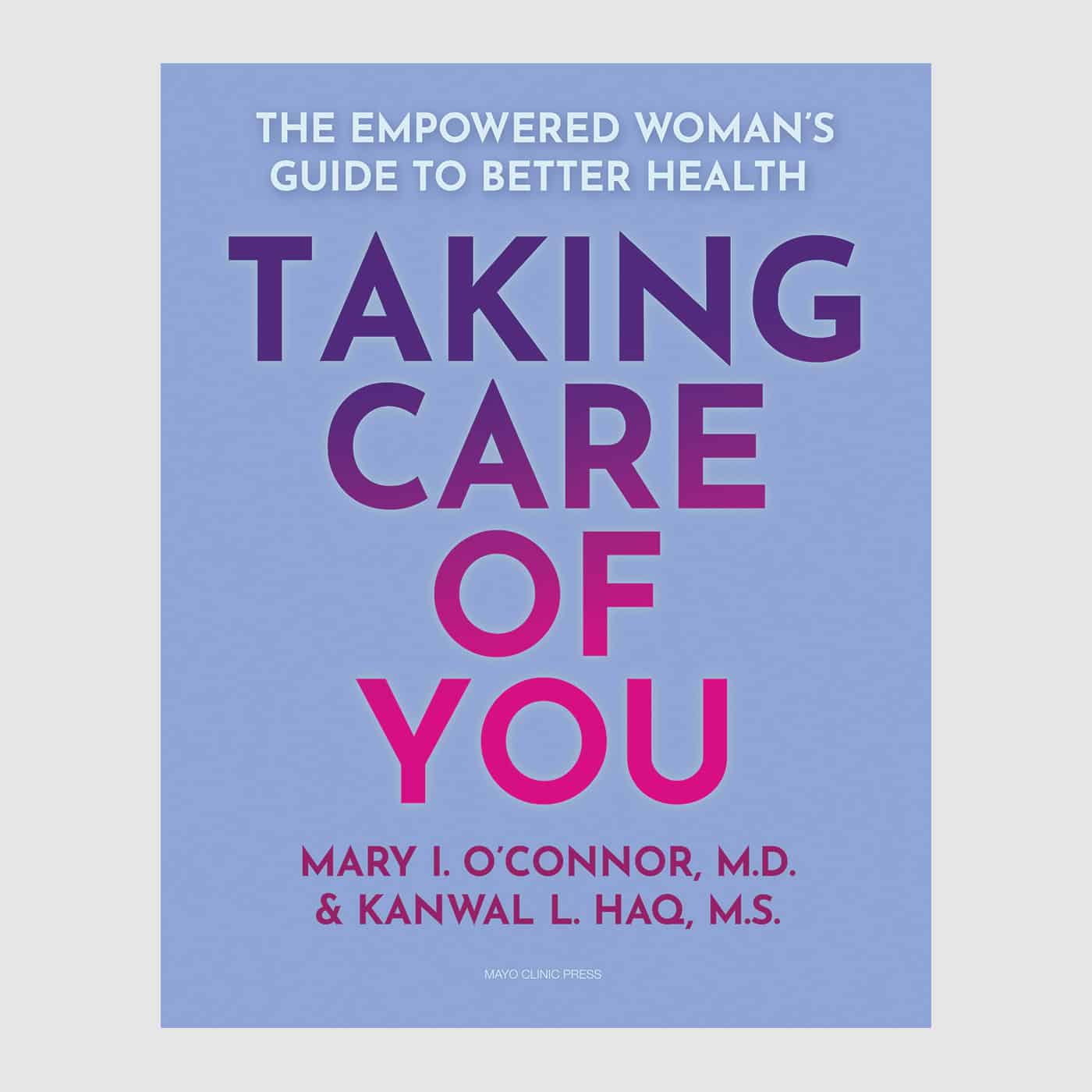
Taking Care of You
A practical and extensive resource guide for women who want to understand and take charge of their own health and healthcare, presented in short, focused, easy-to-read chapters.