Mayo Clinic does not endorse companies or products. Advertising revenue supports our not-for-profit mission.
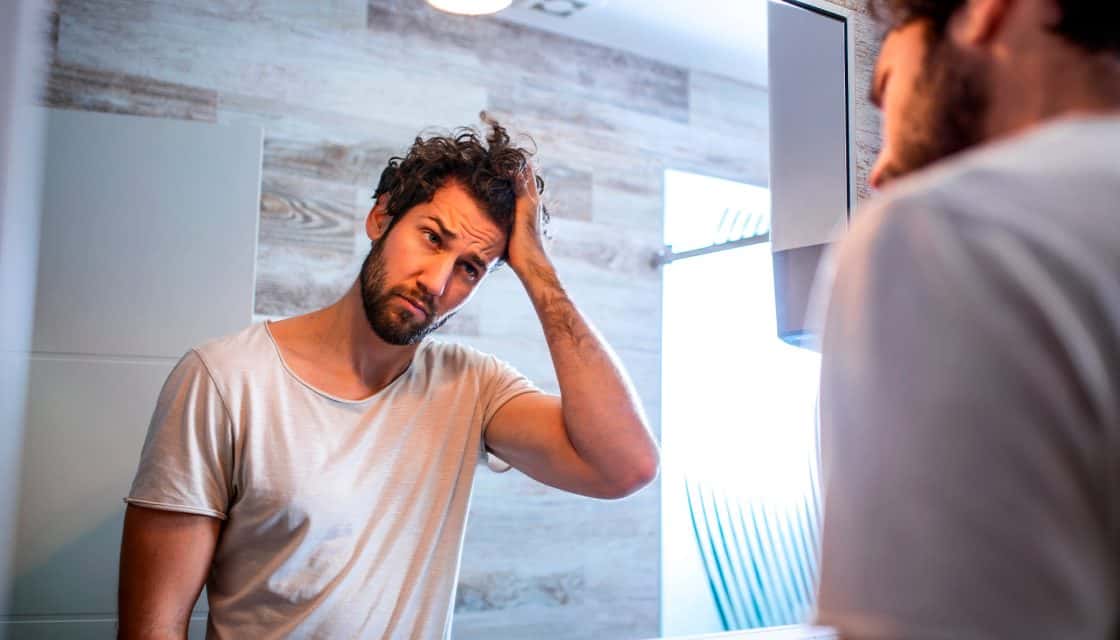
It’s true: Hair loss is a part of life. The American Academy of Dermatology says it is typical to shed 50 to 100 hairs each day. However, excessive hair shedding, particularly in patches on the scalp, could be a sign of an autoimmune disorder known as alopecia areata.
In people with this condition, the immune system targets hair follicles throughout the body, resulting in hair loss in certain areas. It can result in hair loss in patches on the head, total hair loss on the scalp, or total hair loss throughout the body, including on the face and in the genital area.
How do you know if you have alopecia areata? And what’s the cause of this condition? Here are some questions and answers.
How is alopecia areata different from other kinds of alopecia?
Alopecia can be divided into two categories: scarring and nonscarring alopecia. Two common types of nonscarring alopecia are androgenetic alopecia and alopecia areata. Androgenetic alopecia is typical pattern hair loss, including male-pattern hair loss and female-pattern hair loss. This often occurs in predictable patterns — a receding hairline and hair loss on the top of the head in men and thinning hair in the center of the crown for women.
Alopecia areata occurs suddenly, typically beginning on the scalp with one or multiple coin-sized circular bald patches that may overlap. However, these patches can also show up on the face — such as the beard and eyebrow areas.
It is common for people to get confused about the types of alopecia, says Collin M. Costello, M.D., a Mayo Clinic dermatologist who specializes in treating all types of alopecia.
“Alopecia is a fancy word for hair loss, but doesn’t really tell you what subtype,” he says. “Alopecia areata is a subtype of hair loss in which your own immune system is essentially attacking the hair follicle, causing the hairs to ‘go quiet’ or not actively grow.”
Who gets alopecia areata?
Alopecia areata is a common autoimmune disorder affecting about 1 in every 1,000 people. It can affect men, women and children. According to the National Alopecia Areata Foundation, the vast majority — over 80% — of people with the condition experience signs of alopecia areata before the age of 40.
What’s the cause of alopecia areata?
Scientists know alopecia areata is an autoimmune disorder, but they are not sure precisely why an individual’s immune system attacks hair follicles at any given time.
However, some factors can increase the risk of the condition. Studies have shown a genetic predisposition to alopecia areata, so you may be more likely to develop alopecia areata if a blood relative has experienced the disorder. Other diseases that affect the skin or whole body also may increase the risk of developing alopecia areata, including vitiligo, lupus erythematosus, psoriasis and thyroid disease. Asthma, hay fever or atopic dermatitis also are risk factors. One study found a link between smoking and developing alopecia areata.
The cancer drug nivolumab (Opdivo) can cause alopecia areata in some people. Between 1% and 2% of people experienced hair loss, typically a few months after beginning the drug.
Some researchers and people with alopecia areata have seen a correlation between stress or a personal crisis and alopecia areata. Ultimately, the cause of alopecia areata is likely multifactorial, says Dr. Costello.
“There are times where there appears to be an association with stress, an illness or a vaccine,” he says. But he adds, “I wouldn’t say it’s purely just a stress-related disease. You probably have an individual that has some genetic predisposition, and then maybe it’s stress or something else that activates it.”
How does the alopecia areata progress?
“The vast majority of people have patchy hair loss, a more limited disease. Even without treatment, 50% of them will spontaneously recover within a year,” Dr. Costello says.
Some people can have more than one episode in their lives where the hair loss improves then resurfaces again, he says.
Less commonly, alopecia areata can progress in several different ways. You may discover more bare patches. Although this is uncommon, you may lose all the hair on your scalp. In rare instances, the disease also can evolve into total body hair loss, called alopecia universalis.
According to Dr. Costello, factors associated with a prolonged disease course include a case that begins in childhood, family history of the disease, and involvement of the entire scalp, entire body or both.
What doesn’t alopecia areata look like?
Unlike other skin conditions, alopecia areata typically doesn’t cause scaliness or scarring on the skin where hair has fallen out. Instead, there often are short, broken hairs in the patches of baldness.
Doctors often can diagnose people with alopecia areata by hearing about their symptoms and examining their skin and the patterns of baldness. However, in unclear cases, a biopsy can confirm an alopecia areata diagnosis.
What are some common misconceptions about an alopecia areata diagnosis?
Some people believe that there is no treatment for alopecia areata and that the disease is contagious. However, these beliefs are not true: Alopecia areata is not contagious and there is treatment for the disease, including several new options recently approved by the U.S. Food and Drug Administration.
Though successful treatment doesn’t protect you from future episodes of alopecia areata, it can still make a big difference in your quality of life, Dr. Costello says.
“Hair is so important to us in our society,” Dr. Costello says. “We have multiple treatment options for alopecia areata, so it is reasonable to talk with your dermatologist about the options appropriate for your situation.”
Mayo Clinic does not endorse companies or products. Advertising revenue supports our not-for-profit mission.

Relevant reading
Mayo Clinic The Integrative Guide to Good Health
As Americans seek greater control of their health, explosive growth is taking place in the field of integrative medicine. More and more, people are looking for more natural or holistic ways to maintain good health; they want not only to manage and prevent illness but also to improve their quality…